🥦 Nutrition & Nutrients
minerals
supplements
October 1, 2025
Share
Role of Calcium and Importance for Health
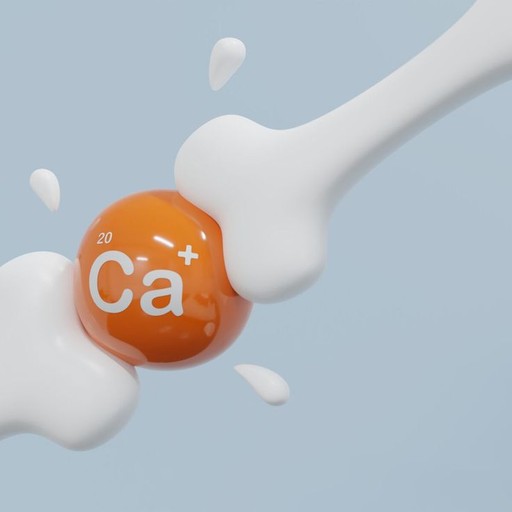
Calcium is the most abundant mineral in the body and is required for more than just building bones and teeth. Ionized calcium in the extracellular fluid regulates muscle contraction and relaxation, blood vessel dilation/contraction, nerve transmission and hormonal secretion . Adults maintain about 3–4 g of calcium, mostly in bone, and concentration in serum is tightly controlled (8.8–10.4 mg/dL) . Because the body cannot make or store extra calcium efficiently, adequate dietary intake is essential throughout life.
Absorption and Metabolism
Duodenum and upper jejunum – Calcium is absorbed mainly in the proximal small intestine. At low intakes, active transport (transcellular) via TRPV6 channels and calbindin is up‑regulated; this pathway requires vitamin D and is predominant in infancy and pregnancy . When intake is higher, calcium crosses enterocytes passively by paracellular diffusion .
Ionization and solubility – Calcium must be ionized before absorption. The low pH of the stomach solubilises calcium salts; complexes such as calcium oxalate are insoluble even at pH 2 and remain poorly absorbed .
Absorption efficiency – Fractional absorption declines as intake increases: about 45 % of calcium from food is absorbed at intakes of 200 mg/day, falling to ≈15 % when intakes exceed 2 g/day . Net absorption is ~60 % in infants, ≈25 % in adults and decreases further with age .
Factors That Enhance Absorption
Vitamin D – Active vitamin D (calcitriol) induces TRPV6 channels and calbindin; low vitamin D status substantially reduces absorption .
Lactose and acidic foods – An acidic gastric environment and carbohydrates such as lactose promote solubility of calcium salts .
Small, frequent doses – Absorption from supplements is greater when doses are ≤500 mg and taken with meals .
Factors That Decrease Absorption or Increase Losses
Oxalate and phytate – These compounds bind calcium to form insoluble complexes. Foods high in oxalate (spinach, rhubarb, beet greens) or phytate (unsoaked legumes, bran) significantly lower calcium bioavailability . For example, only 5 % of calcium in spinach is absorbed compared with ≈27 % from milk .
High sodium or caffeine intake – Caffeine and high phosphorus (from cola drinks) modestly reduce absorption and increase urinary calcium excretion . Excess sodium increases urinary calcium losses.
Low stomach acid – Older adults or people on antacid therapy absorb calcium carbonate poorly because it requires gastric acid for solubilisation; calcium citrate is less dependent on stomach acid .
Other minerals and medications – Large intakes of magnesium, iron or zinc may compete with calcium for transporters. Calcium supplements can bind certain antibiotics and thyroid hormones .
Regulatory Hormones
The hormone hepcidin controls iron absorption but plays no major role in calcium; instead, parathyroid hormone (PTH) and calcitriol regulate serum calcium by increasing intestinal absorption and mobilising bone calcium. Calcitonin reduces serum calcium by inhibiting osteoclast activity.
Recommended Intakes
The Recommended Dietary Allowances (RDA) are based on amounts needed to maintain bone health and neutral calcium balance. Adult RDAs range from 1,000 mg (men and women 19–50 y) to 1,200 mg (women ≥51 y, men ≥71 y) . Children and adolescents require more (1,300 mg for ages 9–18) because of rapid bone accretion . The Tolerable Upper Intake Level (UL) is 2,000–2,500 mg/day for adults; chronic intakes above this may increase the risk of kidney stones or vascular calcification .
UK Reference Nutrient Intake (RNI) values. Adults need ≈700 mg/day; 11–18‑year‑old males require 1,000 mg and females 800 mg . During breastfeeding, intake should increase to 1,250 mg/day . These RNIs apply regardless of diet type and assume adequate vitamin D status.
Dietary Sources of Calcium
Calcium can be obtained from many plant foods, but bioavailability varies. Green vegetables in the brassica family (kale, broccoli, pak choi) have low oxalate and offer good absorption, whereas spinach and rhubarb are high in oxalate and poorly absorbed . Fortified products provide comparable absorption to dairy
Food Source | Calcium Content (mg/100g) | Absorption Rate (%) | Comment |
|---|---|---|---|
Milk, yogurt, cheese | 120–1370 | ~30 | Fermented dairy contains both lactose lactic acid that aid absorption. |
Kale, broccoli, pak choi | 100–150 | ≥50 | Good absorption due to low oxalate. |
Spinach, rhubarb | 90–100 | ≤5 | Oxalates bind calcium, making it insoluble. |
Fish with bones (sardines) | 200–300 | 22–27 | Bones provide readily absorbed calcium. |
Almonds, sesame seeds (tahini) | 200–800 | ~20 | Provide magnesium and healthy fats. |
Supplemental Guidance
Supplements should only be used when dietary intake is insufficient or when medically indicated, as excessive supplemental calcium may increase risk of kidney stones and possibly cardiovascular disease.
Form | % Elemental Ca | Advantages | Disadvantages |
|---|---|---|---|
Calcium carbonate | ~40 % | Widely available and inexpensive; highest elemental calcium; often used to fortify foods . | Requires stomach acid for solubilisation, so best taken with meals; may cause constipation and bloating ; less suitable for people with achlorhydria or on proton‑pump inhibitors . |
Calcium citrate | ~21 % | Better absorbed in people with low stomach acid; can be taken without food; less constipating . | Lower elemental calcium, so more tablets required; generally more expensive. |
Calcium gluconate / lactate | 9–13 % | Liquid and chewable formulations; useful for those with swallowing difficulties . | Contain little elemental calcium; large doses may be needed; cost higher. |
Other forms (phosphate, ascorbate, microcrystalline hydroxyapatite) | Variable | May be used in specialised supplements; hydroxyapatite provides phosphorus and collagen peptides. | Limited evidence of superior efficacy; often expensive. |
Dose size – Take supplements in ≤500 mg increments, preferably with meals to improve absorption .
Interactions – Calcium can reduce absorption of antibiotics (e.g., tetracyclines, quinolones) and thyroid hormone; separate dosing by at least 2 hours .
Side effects – Gas, bloating and constipation are the most common; calcium carbonate tends to be the most constipating .
Excess intake – Do not exceed UL (2,000–2,500 mg/day). High supplemental intakes have been linked to kidney stones and may increase cardiovascular risk .
Practical Recommendations
Meet needs from food first – Emphasise a varied diet with plenty of calcium‑rich foods (dairy or fortified plant alternatives, tofu, low‑oxalate greens, nuts and seeds). Spread calcium‑rich foods across meals to maximise fractional absorption.
Optimise vitamin D – Ensure adequate sun exposure or take a 10 µg (400 IU) supplement daily in winter; vitamin D is required for active calcium transport .
Manage inhibitors – Limit high‑oxalate vegetables and reduce phytate by soaking/sprouting legumes and grains. Moderate caffeine and sodium intake. Adequate protein intake supports bone health but extremely high protein may increase calcium excretion.
Consider supplements cautiously – Use when intake is insufficient or if you have increased requirements (e.g., osteoporosis, malabsorption). Choose a form suited to your digestive status and follow dosing guidance. Consult a healthcare professional before starting supplements, especially if you have kidney disease or take medications.
For more health advise I can create and guide your personalised plan Book your Initial Consultation
Reference List:
Trailokya, A., Srivastava, A., Bhole, M., & Zalte, N. (2017). Calcium and Calcium Salts. Journal of the Association of Physicians of India, 65(2). Available at: https://www.researchgate.net/publication/313717335_Calcium_and_Calcium_Salts
Malde, M. K., Bügel, S., Kristensen, M., Graff, I. E., & Pedersen, J. I. (2010). Calcium from salmon and cod bone is well absorbed in young healthy men: a double-blinded randomised crossover design. Nutrition & Metabolism, 7, 61. Available at: https://nutritionandmetabolism.biomedcentral.com/articles/10.1186/1743-7075-7-61
Shkembi, B., & Huppertz, T. (2021). Calcium Absorption from Food Products: Food Matrix Effects. Nutrients, 14(1), 180. Available at: https://www.mdpi.com/2072-6643/14/1/180
Hodges, J. K., Cao, S., Cladis, D. P., & Weaver, C. M. (2019). Lactose Intolerance and Bone Health: The Challenge of Ensuring Adequate Calcium Intake. Nutrients, 11(4), 718. Available at: https://pmc.ncbi.nlm.nih.gov/articles/PMC6521087/
British Dietetic Association. Calcium. Available at: https://www.bda.uk.com/resource/calcium.html
National Academies of Sciences, Engineering, and Medicine. Calcium – Fact Sheet for Health Professionals. National Institutes of Health, Office of Dietary Supplements. Available at: https://ods.od.nih.gov/factsheets/Calcium-HealthProfessional/
Blogs and Insights