🥦 Nutrition & Nutrients
Digestion
Starch
January 10, 2026
Share
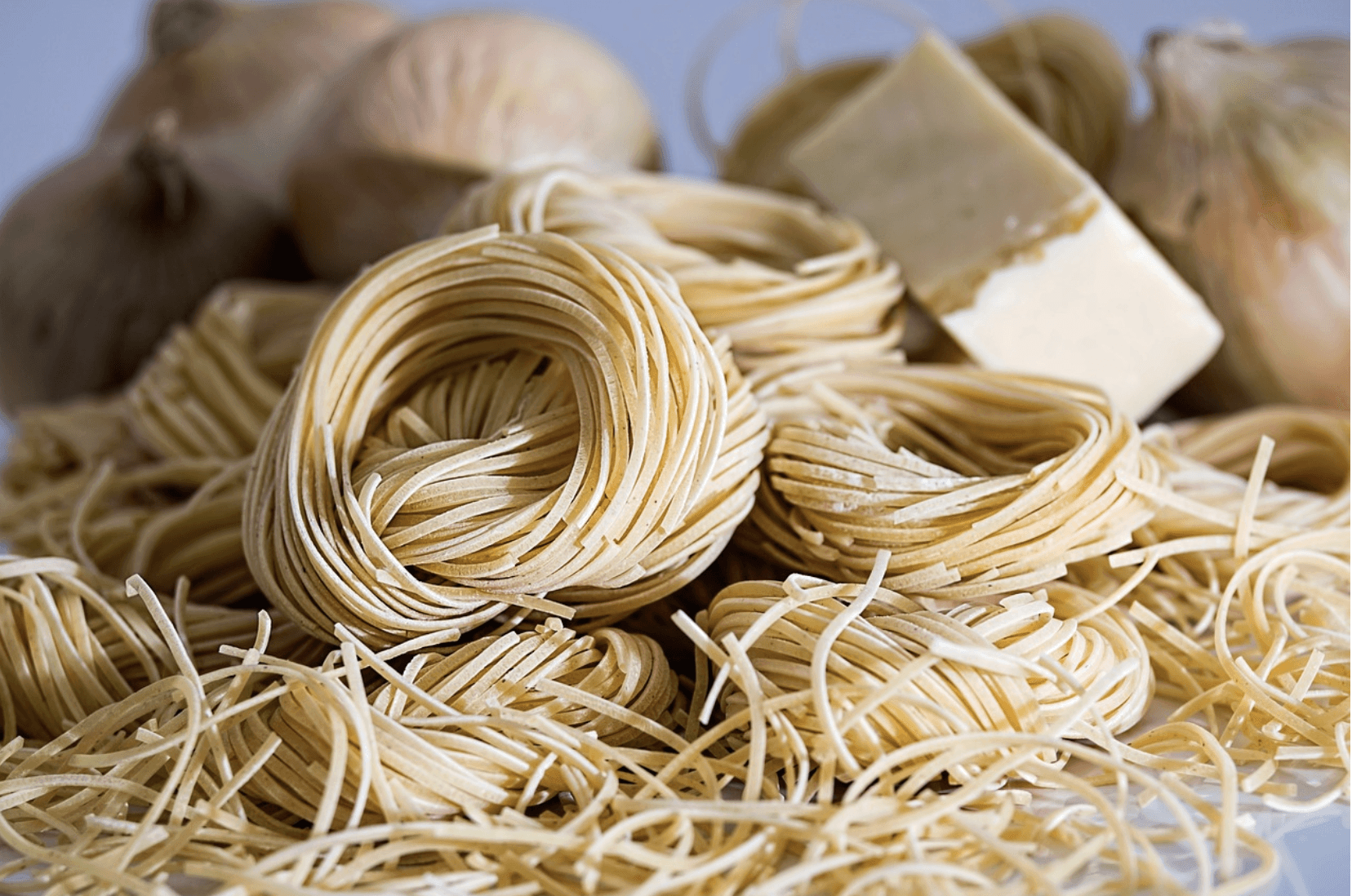
What starch actually is
Chemically, starch is a polymer of glucose. Individual glucose molecules (C₆H₁₂O₆) join together via condensation reactions to form long chains with the repeating unit (C₆H₁₀O₅)ₙ. All natural starch shares this same chemical formula. What differs is not the chemistry itself, but the organisation of glucose units in space.
Starch exists as two main polymers:
amylose, composed mostly of straight chains of glucose linked by α(1→4) bonds, and
amylopectin, a highly branched polymer with both α(1→4) and α(1→6) linkages.
This difference in branching determines how tightly starch molecules pack together, how accessible they are to digestive enzymes, and how quickly glucose is released into the bloodstream.
Foods richer in amylopectin (such as white bread, sticky rice and instant oats) tend to digest quickly and raise blood glucose rapidly. Foods higher in amylose (such as basmati rice, oats, legumes and cooled potatoes) digest more slowly and are more likely to form resistant starch.
Types of starch in the diet
From a digestive perspective, starch can be divided into three functional categories:
Rapidly digestible starch – broken down quickly in the small intestine and absorbed as glucose.
Slowly digestible starch – digested more gradually, producing a gentler glycaemic response.
Resistant starch – resists digestion in the small intestine and reaches the colon intact.
Resistant starch is further classified into five types:
RS1 (physically trapped in plant cell walls, e.g. whole grains and legumes),
RS2 (naturally resistant granules, e.g. green bananas and raw potato starch),
RS3 (formed after cooking and cooling starch),
RS4 (chemically modified starch), and
RS5 (starch–lipid complexes formed when starch binds fat).
Although RS1–RS3 share the same chemical formula as regular starch, their supramolecular structure makes them inaccessible to human amylase enzymes.
How resistant starch differs physiologically
The key difference between digestible and resistant starch lies in where digestion occurs.
Digestible starch is broken down in the small intestine, raising post-meal blood glucose and insulin demand. Resistant starch bypasses this process and enters the colon, where it is fermented by gut bacteria.
Fermentation produces short-chain fatty acids (SCFAs) — primarily acetate, propionate and butyrate. Butyrate plays a central role in colonic health by supporting epithelial integrity, reducing inflammation and strengthening the gut barrier. SCFAs also stimulate gut hormones such as GLP-1 and PYY, which influence insulin secretion, satiety and glucose regulation.
This is why resistant starch behaves metabolically more like functional fibre than a typical carbohydrate.
Glucose metabolism: when starch becomes sugar in the blood
Glucose is a vital fuel for the body. After digestion, glucose enters the bloodstream and is used immediately for energy through glycolysis, producing ATP to power muscles, organs and the brain. Any glucose not required immediately is stored as glycogen in the liver and muscles.
However, glycogen storage capacity is limited. Once these stores are full, excess glucose cannot simply remain in circulation. Instead, the body diverts surplus glucose into de novo lipogenesis — the conversion of carbohydrate into fat.
In the liver, excess glucose is transformed into fatty acids and assembled into triglycerides. These are either stored in liver tissue or exported to adipose tissue for long-term energy storage. This is the biochemical pathway through which habitual high sugar and rapidly digestible starch intake contributes to fat accumulation and fatty liver.
Evidence from human trials
Clinical research supports the distinction between digestible and resistant starch. Randomised controlled trials show that replacing digestible starch with resistant starch reduces postprandial glucose and insulin excursions. In people with type 2 diabetes, consumption of high-resistant-starch rice significantly lowered post-meal glucose levels compared with conventional white rice. Other trials demonstrate improvements in insulin sensitivity after several weeks of resistant starch supplementation, even without weight loss.
Meta-analyses confirm modest but meaningful improvements in fasting glucose and insulin resistance markers when resistant starch replaces rapidly digestible starch. Parallel studies show favourable shifts in the gut microbiome, including increases in Bifidobacterium and Faecalibacterium prausnitzii, key butyrate-producing species associated with anti-inflammatory effects and metabolic resilience.
Clinical application and practical guidance
From a clinical and functional nutrition perspective, resistant starch is particularly relevant for individuals with:
impaired glycaemic control or insulin resistance
polycystic ovary syndrome (PCOS)
metabolic syndrome
constipation or low microbial diversity
diets high in refined carbohydrates
However, because resistant starch is highly fermentable, it should be introduced cautiously in people with IBS, SIBO or significant bloating. Rapid increases can exacerbate gas and discomfort.
The most practical entry point is RS3 — starch that becomes resistant after cooking and cooling. Examples include cooled potatoes, rice, oats and pasta. These foods are widely tolerated, easy to incorporate and supported by strong metabolic evidence. Starting with small portions and increasing gradually allows the microbiome to adapt.
Conclusion
Starch is not a uniform nutrient. Although all starch shares the same chemical formula, its molecular structure determines whether it behaves as a fast glucose source or a gut-supportive fibre. When rapidly digestible starch dominates the diet, glucose overload drives insulin spikes, fat storage and metabolic strain. Resistant starch, by contrast, shifts digestion away from the bloodstream and toward the microbiome, supporting glycaemic stability, insulin sensitivity and gut health.
Used strategically, resistant starch represents a powerful example of how food chemistry directly shapes physiology — not through restriction, but through smarter carbohydrate quality.
References:
Barclay, A.W. (2021). Starch Lingo: Rapidly Digested Starch, Resistant Starch and Slowly Digested Starch. GI News, University of Sydney, July 2021. Available at: https://www.nature.com/articles/nrdp201519.
Hanes, D., et al. (2022). The gastrointestinal and microbiome impact of a resistant starch blend from potato, banana, and apple fibres: a randomised clinical trial using smart caps. Frontiers in Nutrition, 9: 987216. Available at: https://www.frontiersin.org/articles/10.3389/fnut.2022.987216/full
Johnston, K.L., et al. D. (2010). Resistant starch improves insulin sensitivity in metabolic syndrome. Diabetic Medicine, 27(4): 391–397. Available at: https://pubmed.ncbi.nlm.nih.gov/20536509/.
Maziarz, M.P., et al. (2017). Resistant starch lowers postprandial glucose and leptin in overweight adults consuming a moderate-to-high-fat diet: a randomised-controlled trial. Nutrition Journal, 16(1): 14. Available at: https://nutritionj.biomedcentral.com/articles/10.1186/s12937-017-0243-5.
Tan, L.-L., et al. (2022). Naturally cultured high resistant starch rice improved postprandial glucose levels in patients with type 2 diabetes: a randomised, double-blinded, controlled trial. Frontiers in Nutrition, 9: 1019868. Available at: https://www.frontiersin.org/articles/10.3389/fnut.2022.1019868/full.
Xiong, K., et al. (2021). Effects of resistant starch on glycemic control: a systematic review and meta-analysis of randomised controlled trials. British Journal of Nutrition, 125(11): 1260–1269. Available at: https://pubmed.ncbi.nlm.nih.gov/32959735/.
Blogs and Insights