🌍 Foundations of Health
Neuroscience
Brain Health
October 3, 2025
Share
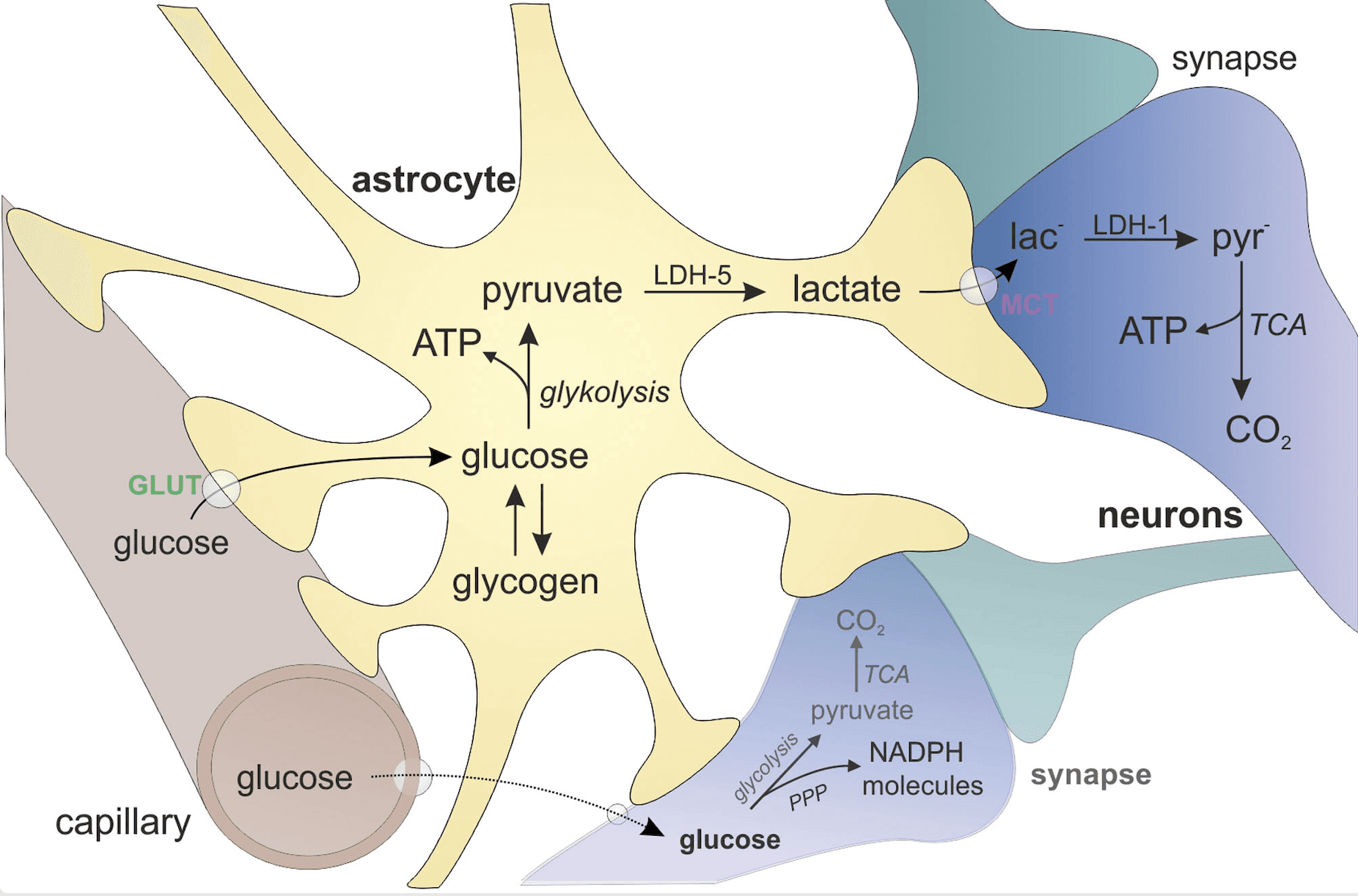
The human brain is small (≈2 % of body mass) yet metabolically demanding – it consumes roughly one‑fifth of the body’s total energy supply. Most of this energy is used for neural signaling: action potentials and synaptic transmission account for about 80 % of the brain’s ATP expenditure. The brain has limited energy reserves and cannot synthesise or store significant amounts of glucose , so it relies on a continuous supply of energy substrates. In a healthy adult, glucose is the primary fuel, but the brain can switch to alternative fuels such as lactate, glycogen and ketone bodies when necessary. Understanding this metabolic flexibility and the consequences of fuel shortage is crucial for interpreting cognitive performance and neurological disease.
Preferred fuel: glucose
Glucose uptake and metabolism
Glucose is the default energy substrate for the brain. Neurons express high levels of glucose transporters and hexokinase (HK1), allowing rapid uptake and phosphorylation of glucose . Glucose undergoes glycolysis in the cytosol to produce pyruvate; pyruvate enters mitochondria, where it is oxidised through the tricarboxylic acid (TCA) cycle and oxidative phosphorylation, yielding ~30–32 ATP per molecule. Although neurons can perform glycolysis, they have a limited glycolytic capacity because the glycolytic regulator PFKFB3 is continuously degraded; this forces neurons to rely heavily on oxidative metabolism and utilise glucose sparingly for the pentose‑phosphate pathway (PPP).
Astrocytes, by contrast, have a higher glycolytic rate and store glycogen. They take up glutamate released at synapses, stimulating Na⁺/K⁺‑ATPase and triggering glycolysis; the resulting lactate is exported to neurons. This astrocyte‑neuron lactate shuttle means neurons may prefer lactate as an oxidative fuel during high activity, sparing glucose for antioxidant defense through the PPP . Indeed, in vivo experiments show that when lactate is available, it becomes the primary energy substrate, and plasma glucose utilisation falls. Glucose therefore functions not only as an energy substrate but also as a source of reducing equivalents and as a precursor for neurotransmitter synthesis.
Glycogen: local reserve
The brain contains small glycogen stores, mostly confined to astrocytes. Astrocytic glycogen is mobilised during periods of high energy demand, stress or learning. When norepinephrine signals glycogenolysis, astrocytes produce glucose‑6‑phosphate and lactate, supporting neuronal function. Glycogen metabolism changes with age and neurodegeneration; enzyme expression alters and glycogen stores can become dysregulated. Nonetheless, glycogen is an important buffer that prevents transient energy deficits during intense neuronal activity.
Energy demands within the brain
The brain’s energy budget is dominated by information processing: synaptic transmission and action potentials (communication) require about 65 % of energy, whereas computation (e.g., postsynaptic integration and plasticity) uses roughly 15 % . Housekeeping tasks such as maintaining ion gradients and macromolecule synthesis account for the remainder. The chart below visualises this allocation.
Alternative fuels: lactate and ketone bodies
Lactate shuttle
Astrocytes metabolise glucose to lactate and release it through monocarboxylate transporters (MCTs). Neurons take up lactate via MCTs and oxidise it in mitochondria. Because neurons degrade PFKFB3, they prefer oxidative metabolism and have limited glycolytic capacity, making lactate an efficient fuel . In conditions such as hypoglycemia or intense neuronal firing, lactate infusion can sustain neuronal activity and reduce cerebral glucose utilisation. Thus, lactate is more than a waste product; it is a dynamic energy shuttle between astrocytes and neurons.
Ketone bodies
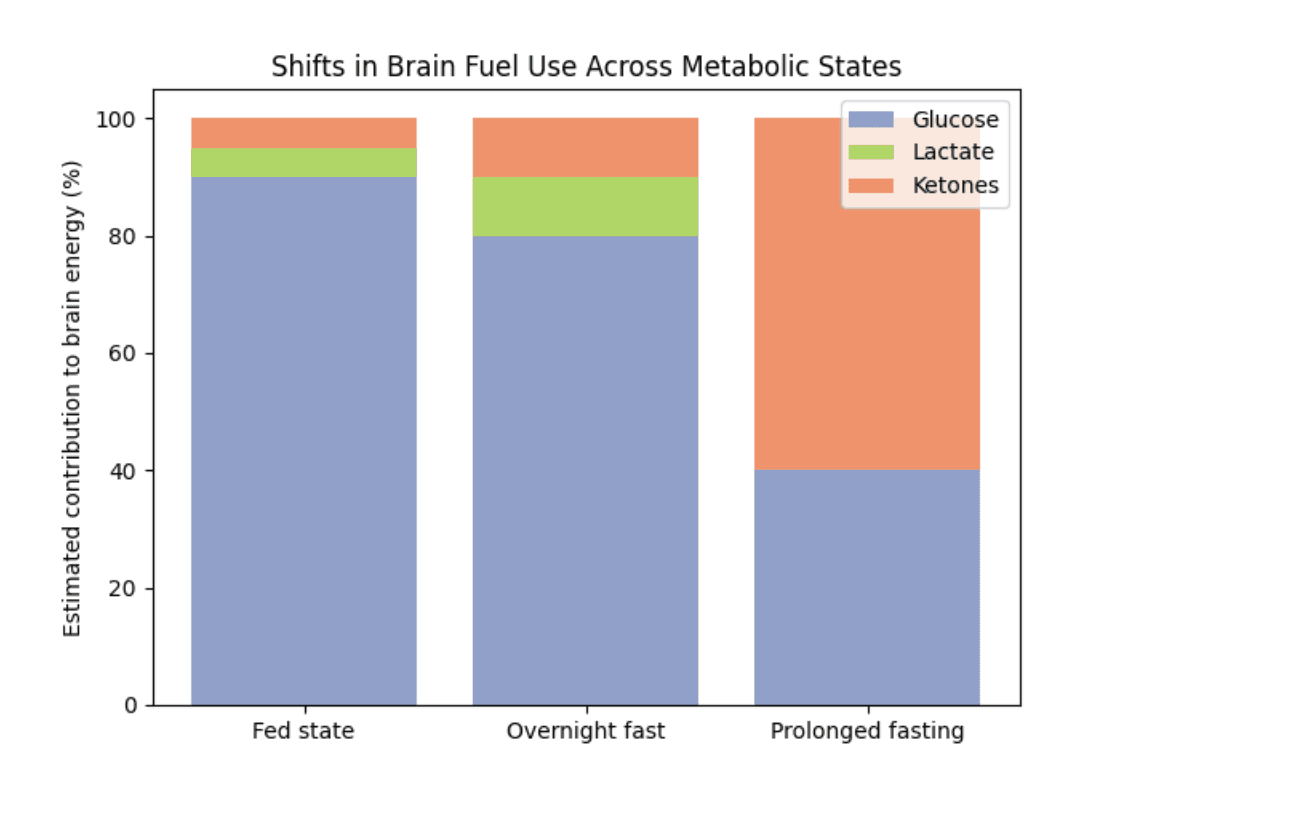
Ketone bodies (acetoacetate and β‑hydroxybutyrate) are produced by hepatic β‑oxidation of fatty acids during fasting, prolonged exercise or ketogenic diets. They can cross the blood–brain barrier and serve as a significant energy source. After 5–6 weeks of prolonged fasting, ketone bodies may supply up to 60 % of the brain’s energy, markedly reducing glucose consumption . Astrocytes may also produce small amounts of ketone bodies and supply them to neurons. Ketones have signalling roles; β‑hydroxybutyrate inhibits astrocytic glycolysis and activates pyruvate metabolism, potentially offering neuroprotective benefits. However, the brain does not efficiently oxidise long‑chain fatty acids because of oxidative stress; ketones circumvent this by being water‑soluble and readily oxidised.
Fuel flexibility across metabolic states
The proportions of glucose, lactate and ketones used by the brain shift depending on feeding status. During the fed state, glucose accounts for about 90 % of brain energy and lactate or ketones make minor contributions. In an overnight fast, ketone bodies and lactate can provide a larger share (~10 % each), while glucose still dominates. Prolonged fasting dramatically increases ketone use. The following stacked bar chart illustrates these shifts.
If hypoglycaemia persists and plasma glucose drops below ~2.0 mmol/L, neuronal ATP production fails, causing functional brain failure. If blood glucose is rapidly restored, neurological function returns. However, prolonged severe hypoglycaemia can cause neuronal death, resulting in coma or brain death .
Summary of brain fuels
Fuel | Source & condition | Comments |
|---|---|---|
Glucose | Dietary carbohydrates; hepatic glycogenolysis; gluconeogenesis | Primary fuel; high uptake by neurons. Required continuously because the brain stores little glucose |
Lactate | Produced by astrocytes from glycolysis or by muscles during exercise | Shuttled to neurons via MCTs; preferred during intense activity |
Glycogen | Stored in astrocytes; mobilised by norepinephrine | Provides glucose or lactate during high demand; supports learning and memory |
Ketone bodies | Generated in liver during fasting, ketogenic diets, exercise; small amounts by astrocytes | Supply up to 60 % of brain energy during prolonged fasting ; have neuroprotective roles |
Consequences of insufficient energy substrates
Hypoglycaemia and brain failure
Because the brain cannot store significant glucose, falling blood glucose elicits rapid counter‑regulatory responses. Insulin secretion decreases around 4.5 mmol/L. At about 4.0 mmol/L, glucagon and epinephrine secretion increases to raise plasma glucose . Neurogenic symptoms (sweating, tremor, anxiety) appear around 3.2 mmol/L. Cognitive impairment occurs at ≈2.8 mmol/L, and severe hypoglycaemia (≤2.5 mmol/L) can induce seizures or coma. These thresholds are illustrated below.
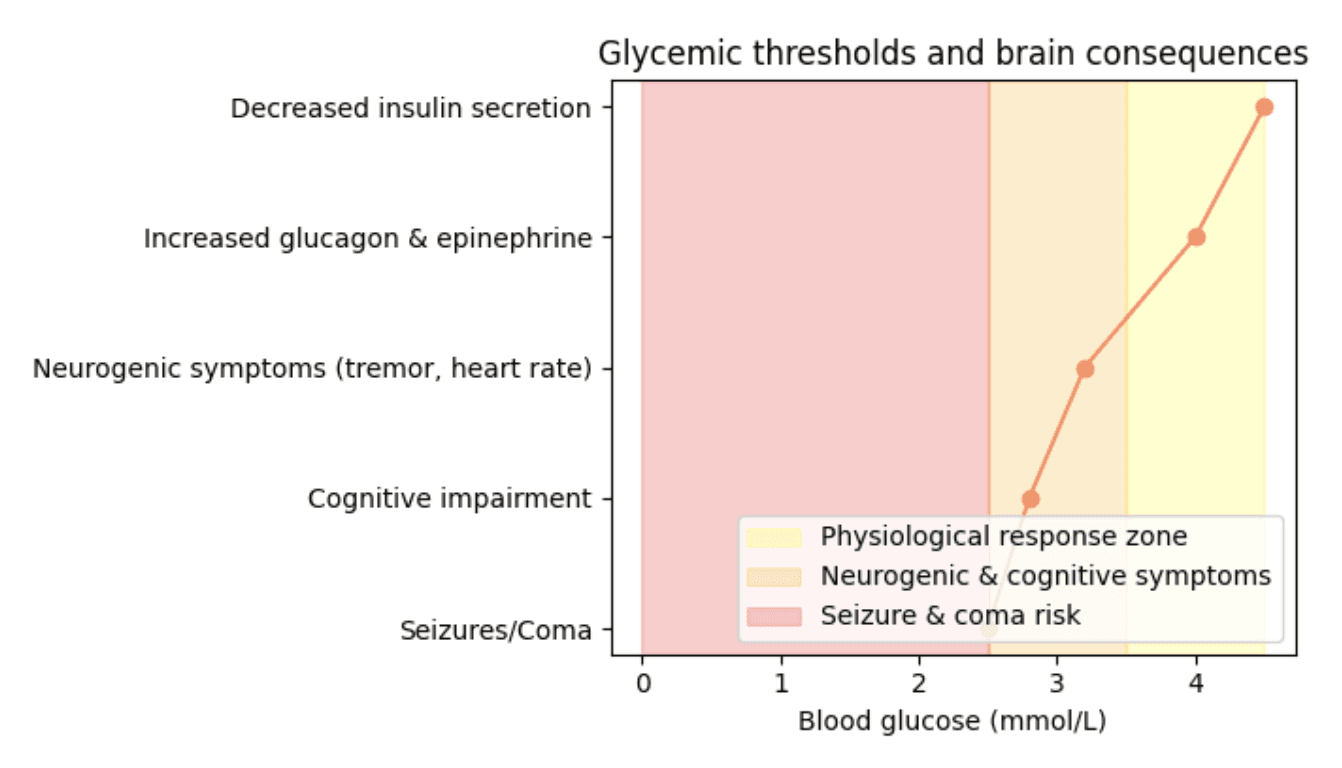
If hypoglycaemia persists and plasma glucose drops below ~2.0 mmol/L, neuronal ATP production fails, causing functional brain failure. If blood glucose is rapidly restored, neurological function returns. However, prolonged severe hypoglycaemia can cause neuronal death, resulting in coma or brain death.
Energy crises in disease
Neurodegenerative diseases often involve impaired glucose metabolism. Reduced glucose uptake or mitochondrial dysfunction can lead to chronic energy deficits. The brain attempts to compensate by oxidising lactate or ketone bodies; ketogenic diets or exogenous ketones are being investigated as therapies for Alzheimer’s and Parkinson’s disease. Astrocytic glycogen can buffer short‑term deficits, but dysregulated glycogen metabolism may contribute to epilepsy or cognitive decline.
Conclusion
The brain’s energy metabolism is characterised by high demand, limited reserves and remarkable flexibility. Glucose is the primary fuel, while lactate shuttled from astrocytes and ketone bodies generated during fasting serve as important alternatives. Glycogen provides a local reserve in astrocytes for intense neuronal activity. When energy substrates become insufficient – whether through hypoglycaemia, mitochondrial dysfunction or neurodegenerative disease – cognitive function declines rapidly. Strategies that ensure a steady supply of glucose and support alternative fuels may therefore be crucial for maintaining brain health and function.
References:
Cryer, P.E. (2007) ‘Hypoglycemia, functional brain failure, and brain death’, Journal of Clinical Investigation, 117(4), pp. 868–870. Available at: https://doi.org/10.1172/JCI31669.
Duran, J. et al. (2019) ‘Glycogen in Astrocytes and Neurons: Physiological and Pathological Aspects’, Advances in Neurobiology, 23, pp. 311–329. Available at: https://doi.org/10.1007/978-3-030-27480-1_10.
Gautron, L., Elmquist, J.K. and Williams, K.W. (2015) ‘Neural Control of Energy Balance: Translating Circuits to Therapies’, Cell, 161(1), pp. 133–145. Available at: https://doi.org/10.1016/j.cell.2015.02.023.
Jensen, N.J. et al. (2020) ‘Effects of Ketone Bodies on Brain Metabolism and Function in Neurodegenerative Diseases’, International Journal of Molecular Sciences, 21(22), p. 8767. Available at: https://doi.org/10.3390/ijms21228767.
Rumpf, S., Sanal, N. and Marzano, M. (2023) ‘Energy metabolic pathways in neuronal development and function’, Oxford Open Neuroscience, 2, p. kvad004. Available at: https://doi.org/10.1093/oons/kvad004.
Shichkova, P. et al. (2024) ‘Brain Metabolism in Health and Neurodegeneration: The interplay among neurons and astrocytes’, Cells, 13(20), p. 1714. Available at: https://doi.org/10.3390/cells13201714.
Wyss, M.T. et al. (2011) ‘In Vivo Evidence for Lactate as a Neuronal Energy Source’, The Journal of Neuroscience, 31(20), pp. 7477–7485. Available at: https://doi.org/10.1523/JNEUROSCI.0415-11.2011.
Blogs and Insights