✨ Skin & Aging
Gut & Digestion
Research
October 19, 2025
Share
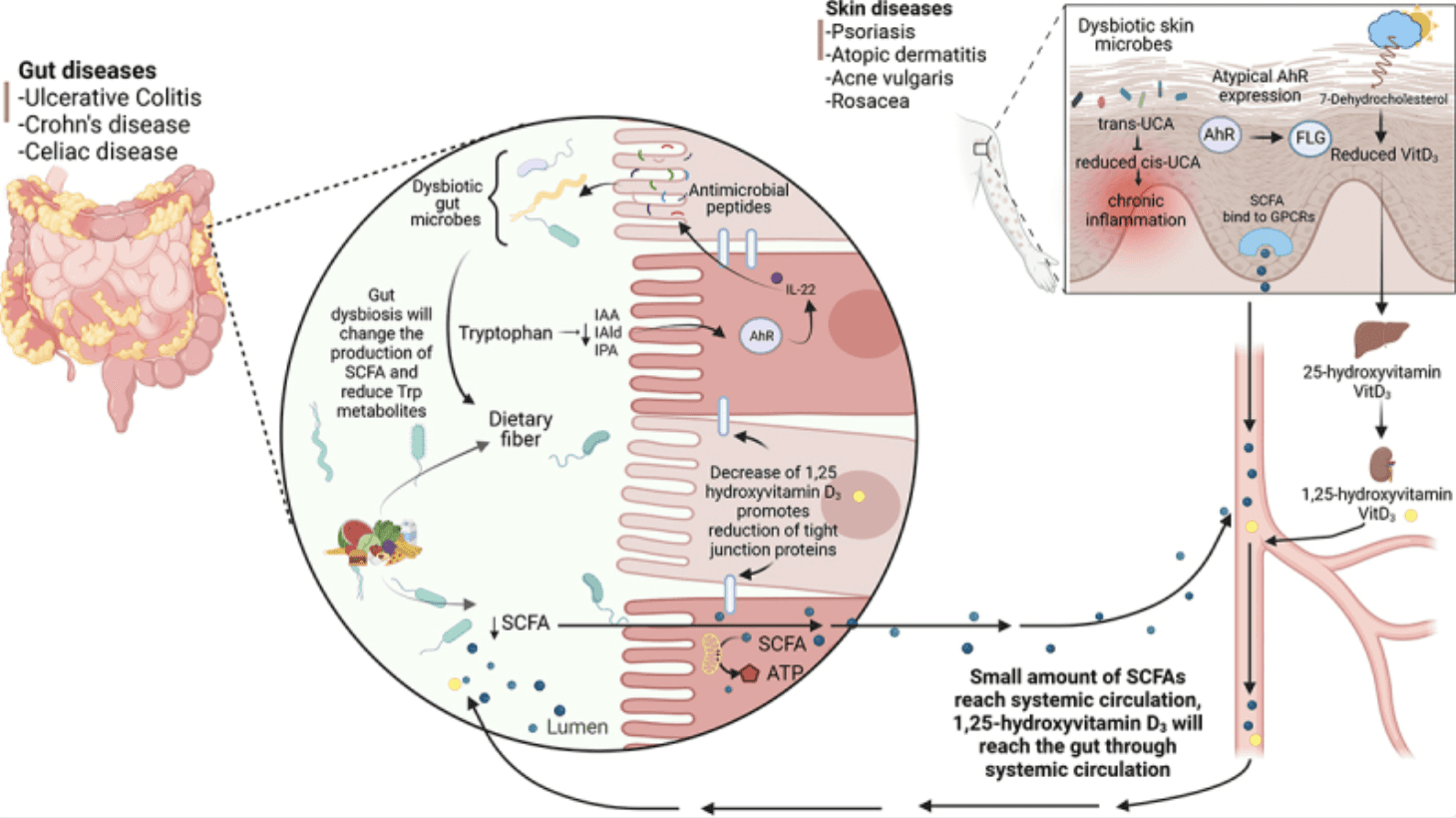
(Jimenez-Sanchez et al. 2025)
How the Gut Affects the Skin
Barrier & Inflammation: Increased intestinal permeability allows lipopolysaccharides (LPS), components of the outer wall of certain bacteria, to enter the blood circulation, triggering release of inflammatory molecules such as NF-κB and cytokine that promote cutaneous (or skin) inflammation.
Immune Modulation: Gut microbes influence the immune system, specifically T-cell balance (Th17/Treg) and mast-cell activity — when this balance shifts, it can make the skin more reactive or inflamed.
Microbial Metabolites: Healthy gut bacteria produce natural anti-inflammatory compounds that help your skin stay hydrated, resilient, and less irritated. These include short-chain fatty acids (SCFAs) such as butyrate, propionate, and acetate, which strengthen the gut and skin barriers and calm inflammation. Tryptophan metabolites (from protein breakdown) and bile acids also circulate through the bloodstream to the skin, where they support healthy cell turnover, regulate immunity, and maintain moisture balance.
Neuroendocrine Crosstalk: Gut microbes interact closely with the nervous and hormonal systems—particularly the HPA axis (hypothalamic–pituitary–adrenal axis), serotonin, and GABA pathways that regulate stress and mood. When the gut microbiome is imbalanced, it can disrupt these pathways, leading to higher stress levels and more frequent stress-related skin flare-ups.
Bidirectionality: The gut–skin axis is a two-way relationship: while gut imbalance can trigger skin inflammation, skin conditions and external factors such as UV exposure or chronic irritation can also alter the gut microbiome. This creates a feedback loop that sustains inflammation in both systems.
Evidence Summary
Multiple reviews and clinical studies confirm that gut dysbiosis (loss of beneficial bacteria like Bifidobacterium and Faecalibacterium) is associated with inflammatory skin conditions.
Pilot interventions using probiotics, prebiotics, synbiotics, and high-fibre diets have shown improvements in skin inflammation and hydration.
Mechanistic data indicate that restoring microbial balance reduces systemic cytokine load and strengthens both gut and skin barriers.
Therapeutic Strategies
Probiotics & Prebiotics: Certain strains (e.g., Lactobacillus rhamnosus, Bifidobacterium longum) have improved eczema and psoriasis in small trials, though effects vary by strain, dose, and duration.
Dietary Interventions: High-fibre, antioxidant-rich, and polyphenol-dense diets support SCFA production and lower inflammatory mediators.
Personalised Modulation: Tailoring nutrition or supplementation to an individual’s gut microbial profile can optimise outcomes.
Clinical Testing & Personalised Support
It is now possible to test your gut microbiome to identify which bacterial species are prevalent or depleted. These advanced stool analyses reveal the balance of beneficial and pathogenic microbes, levels of SCFAs, and markers of gut barrier integrity—all of which can influence your skin health.
We can help you order and interpret these tests, explain what your results mean for your skin, and design a personalised gut-skin support plan using targeted nutrition and lifestyle strategies to help your skin thrive.
➡️ Book a consultation with me to begin exploring your gut–skin connection and create a tailored plan for radiant, resilient skin.
References:
Jiménez-Sánchez, M. et al. (no date) ‘The gut–skin axis: a bi-directional, microbiota-driven relationship with therapeutic potential’, Gut Microbes, 17(1), p. 2473524. Available at: https://doi.org/10.1080/19490976.2025.2473524.
Mahmud, Md.R. et al. (2022) ‘Impact of gut microbiome on skin health: gut-skin axis observed through the lenses of therapeutics and skin diseases’, Gut Microbes, 14(1), p. 2096995. Available at: https://doi.org/10.1080/19490976.2022.2096995.
Munteanu, C., Turti, S. and Marza, S.M. (2025) ‘Unraveling the Gut–Skin Axis: The Role of Microbiota in Skin Health and Disease’, Cosmetics, 12(4), p. 167. Available at: https://doi.org/10.3390/cosmetics12040167.
Szántó, M. et al. (2019) ‘Targeting the gut–skin axis—Probiotics as new tools for skin disorder management?’, Experimental Dermatology, 28(11), pp. 1210–1218. Available at: https://doi.org/10.1111/exd.14016.
Zhao, Y. et al. (2025) ‘The gut–skin axis: Emerging insights in understanding and treating skin diseases through gut microbiome modulation (Review)’, International Journal of Molecular Medicine, 56(6), p. 210. Available at: https://doi.org/10.3892/ijmm.2025.5651.
Blogs and Insights