🌿 Gut & Digestion
Macronutrients
Digestion
October 9, 2025
Share
The Hidden World of Endogenous Protein
The body doesn't just digest the protein you eat; it's simultaneously breaking down and recycling nearly as much of its own protein every single day.
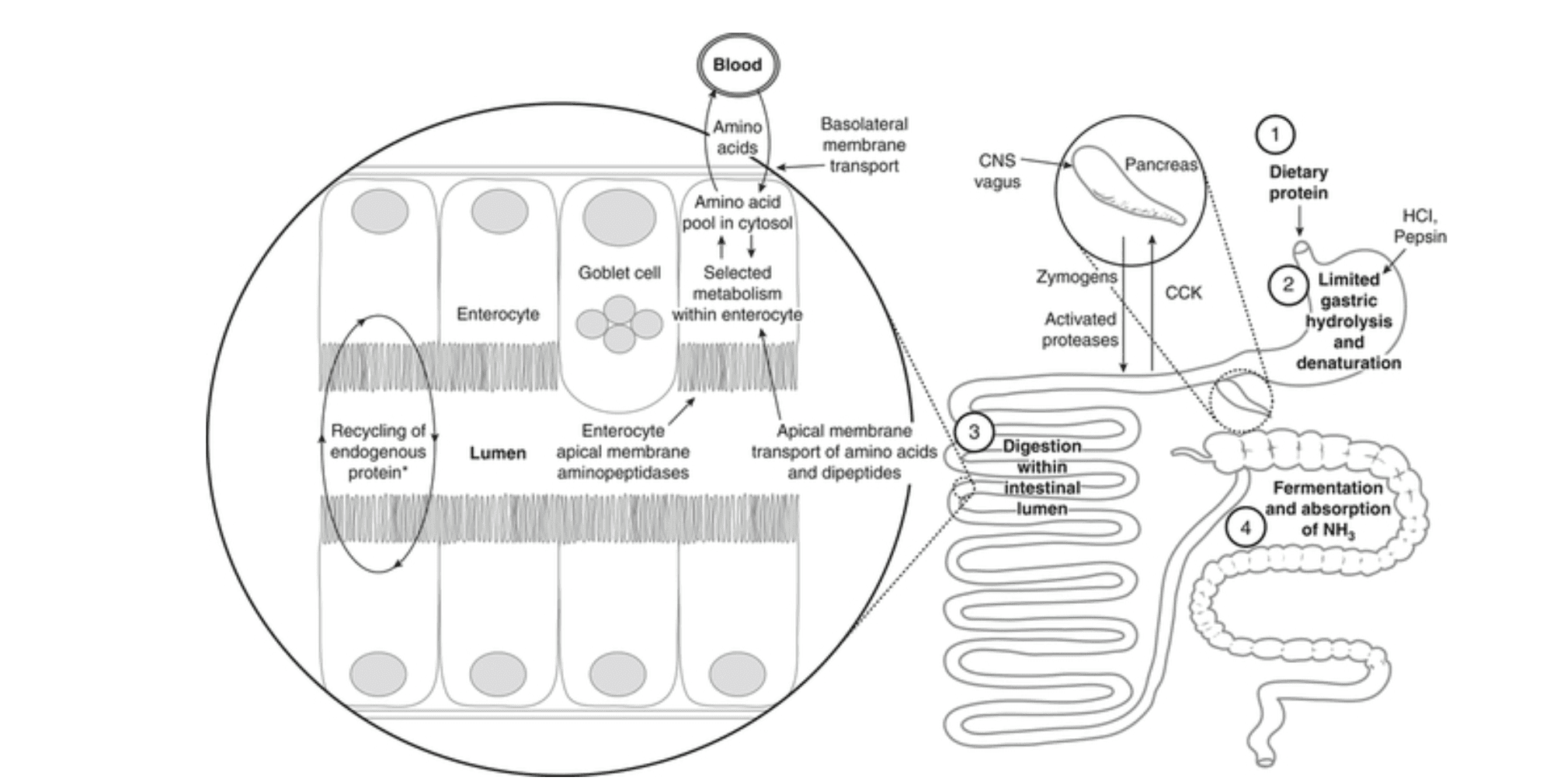
Here's something that might surprise you: your gut contains a massive amount of non-dietary protein that has nothing to do with your last meal. This "endogenous protein" includes digestive enzymes, protective mucus, and old intestinal cells that are constantly being shed and replaced.
The numbers are remarkable. The endogenous protein entering your digestive tract equals or exceeds your dietary protein intake—meaning if you eat 100g of protein daily, your body is simultaneously processing another 100g+ of its own protein. Even more impressive, up to 80% of this internal protein is digested and reabsorbed by the time it reaches the end of your small intestine.
This isn't just metabolic housekeeping. Research using computer modeling suggests that proteins like mucin-5AC (a major mucus component) and serum albumin may release dozens of bioactive peptides during digestion—compounds that could have effects like ACE inhibition (blood pressure regulation). Your gut may be a constant source of bioactive peptides, potentially as impactful as any supplement you take.
The Enzymatic Assembly Line: From Complex Proteins to Absorbable Building Blocks
Stage 1: Stomach—Pepsin Gets Things Started
Your protein digestion journey begins in the stomach's harsh, acidic environment. Here, pepsinogen (an inactive enzyme precursor) transforms into active pepsin when pH drops below 2.
Pepsin deserves more credit than it gets. This enzyme is remarkably efficient at breaking down large, folded proteins into smaller peptides—something it does much better than the pancreatic enzymes that come later. Research shows pepsin particularly excels with native (naturally folded) proteins, while pancreatic enzymes struggle with intact proteins unless they've been heat-denatured first.
Stage 2: Small Intestine—The Pancreatic Powerhouses
When partially digested proteins reach your duodenum, three major pancreatic enzymes take over:
Trypsin acts like molecular scissors with a specific target: it cuts proteins at the carboxyl side of lysine and arginine amino acids. It starts as inactive trypsinogen and gets activated by an intestinal enzyme called enteropeptidase—a crucial step that prevents your pancreas from digesting itself.
Chymotrypsin (activated by trypsin) has different preferences, cleaving at hydrophobic aromatic amino acids like phenylalanine, tyrosine, and tryptophan.
Elastase completes the trio, targeting different amino acid sequences to ensure comprehensive protein breakdown.
Interestingly, these pancreatic enzymes are relatively inefficient against intact native proteins compared to pepsin. They work best on proteins that have already been unfolded—highlighting why proper stomach function is crucial for optimal protein digestion.
Stage 3: Brush-Border Cleanup Crew
The final step happens at the small intestine's brush border, where aminopeptidases act like precise trimmers, snipping individual amino acids from the N-terminus (beginning) of small peptides. This liberates the final amino acids for absorption into your bloodstream.
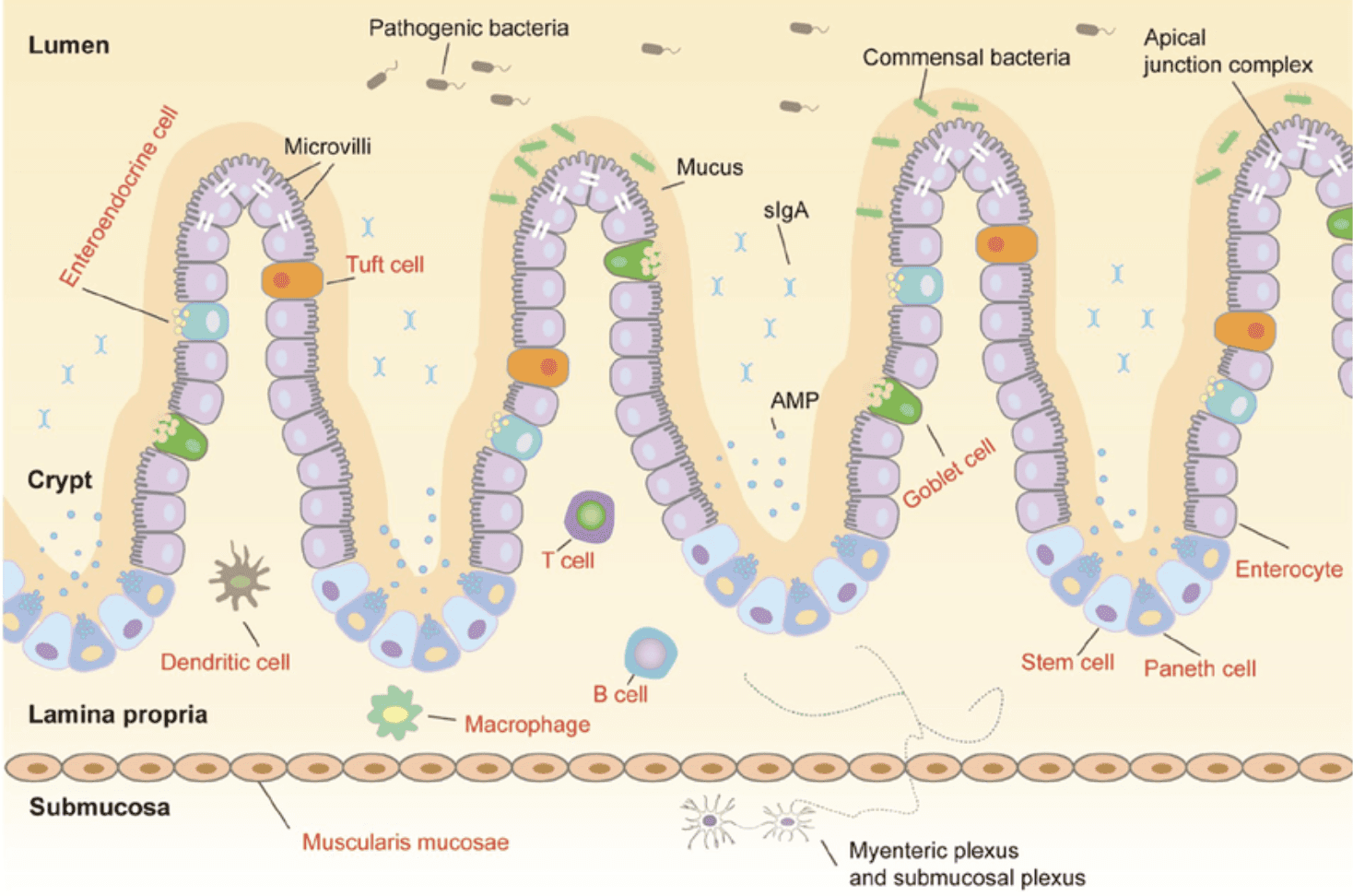
(Xian et al. 2023)
When Protein Digestion Goes Wrong: Warning Signs
Poor protein digestion doesn't always announce itself dramatically, but your body gives subtle signals:
Digestive Symptoms
Bloating, gas, or feeling heavy after protein-rich meals (likely from undigested protein fermenting in your colon)
Visible undigested food particles in stool or unusually strong feacal odour
Feeling full for hours after moderate protein intake
Systemic Signs
Slow wound healing or frequent injuries
Brittle, weak nails or thinning hair
Persistent fatigue despite adequate rest
Difficulty building or maintaining muscle mass even with exercise
These symptoms may reflect insufficient amino acid availability from poor digestion, rather than inadequate protein intake.
Testing Your Protein Digestion: Know Your Options
If you suspect protein digestion issues, several tests can provide insights:
Comprehensive Digestive Stool Analysis (CDSA): Reveals undigested proteins, enzyme activity levels, and inflammation markers in your digestive tract
Stool Elastase or Chymotrypsin Tests: Measure pancreatic enzyme output—particularly useful for detecting pancreatic insufficiency
Betaine HCl Challenge Test: Under healthcare supervision, supplementing with stomach acid during meals can reveal whether low gastric acidity is impairing protein breakdown
Food Transit Time Assessment: Unusually fast or slow digestive transit can affect protein absorption efficiency
Blood Markers
Serum albumin levels: Low levels may indicate protein malabsorption or systemic deficiency
Amino acid profiles: Can reveal imbalances suggesting digestive inefficiency
Explore Testing
Click here tofind out more.
How Food Processing Affects Your Protein Absorption
The way protein foods are prepared significantly impacts how quickly and effectively your body can digest and absorb them:
Processing That Helps
Heat treatment: Cooking unfolds proteins, making them more accessible to digestive enzymes
Fermentation: Pre-digests proteins partially, as seen in yogurt, kefir, and fermented soy products
Mechanical processing: Grinding or chopping increases surface area for enzyme action
Controlled hydrolysis: Pre-digested proteins (like some sports supplements) speed absorption
Processing That May Hinder
Excessive aggregation: Over-processed proteins may form complex structures that resist digestion
High-temperature processing: Can create resistant protein cross-links (though moderate heat helps)
Anti-nutrient preservation: Some processing methods retain compounds that inhibit protein digestion
Real-World Examples
Raw vs. cooked eggs: Cooking dramatically improves protein digestibility from about 50% to over 90%
Milk proteins: Fermentation in yogurt pre-digests proteins, making them more accessible
Plant proteins: Soaking, sprouting, and cooking can reduce anti-nutritional factors and improve digestibility
For more precise, personalised advice Choose a Consultation.
Reference List:
Dave, L.A. et al. (2014) ‘Gastrointestinal Endogenous Proteins as a Source of Bioactive Peptides - An In Silico Study’, PLOS ONE, 9(6), p. e98922. Available at: https://doi.org/10.1371/journal.pone.0098922.
Fu, Z. et al. (2021) ‘Marked difference in efficiency of the digestive enzymes pepsin, trypsin, chymotrypsin, and pancreatic elastase to cleave tightly folded proteins’, Biological Chemistry, 402(7), pp. 861–867. Available at: https://doi.org/10.1515/hsz-2020-0386.
Heda, R., Toro, F. and Tombazzi, C.R. (2025) ‘Physiology, Pepsin’, in StatPearls. Treasure Island (FL): StatPearls Publishing. Available at: http://www.ncbi.nlm.nih.gov/books/NBK537005.
Loveday, S.M. (2023) ‘Protein digestion and absorption: the influence of food processing’, Nutrition Research Reviews, 36(2), pp. 544–559. Available at: https://doi.org/10.1017/S0954422422000245.
Moughan, P.J. and Marlies Leenaars, G.S. (1992) ‘Endogenous amino acid flow in the stomach and small intestine of the young growing pig’, Journal of the Science of Food and Agriculture, 60(4), pp. 437–442. Available at: https://doi.org/10.1002/jsfa.2740600406.
Xian, C. et al. (2023) ‘Gut-on-a-chip for disease models’, Journal of Tissue Engineering, 14, p. 20417314221149882. Available at: https://doi.org/10.1177/20417314221149882.
Blogs and Insights