🌿 Gut & Digestion
Liver
Detoxification
October 9, 2025
Share
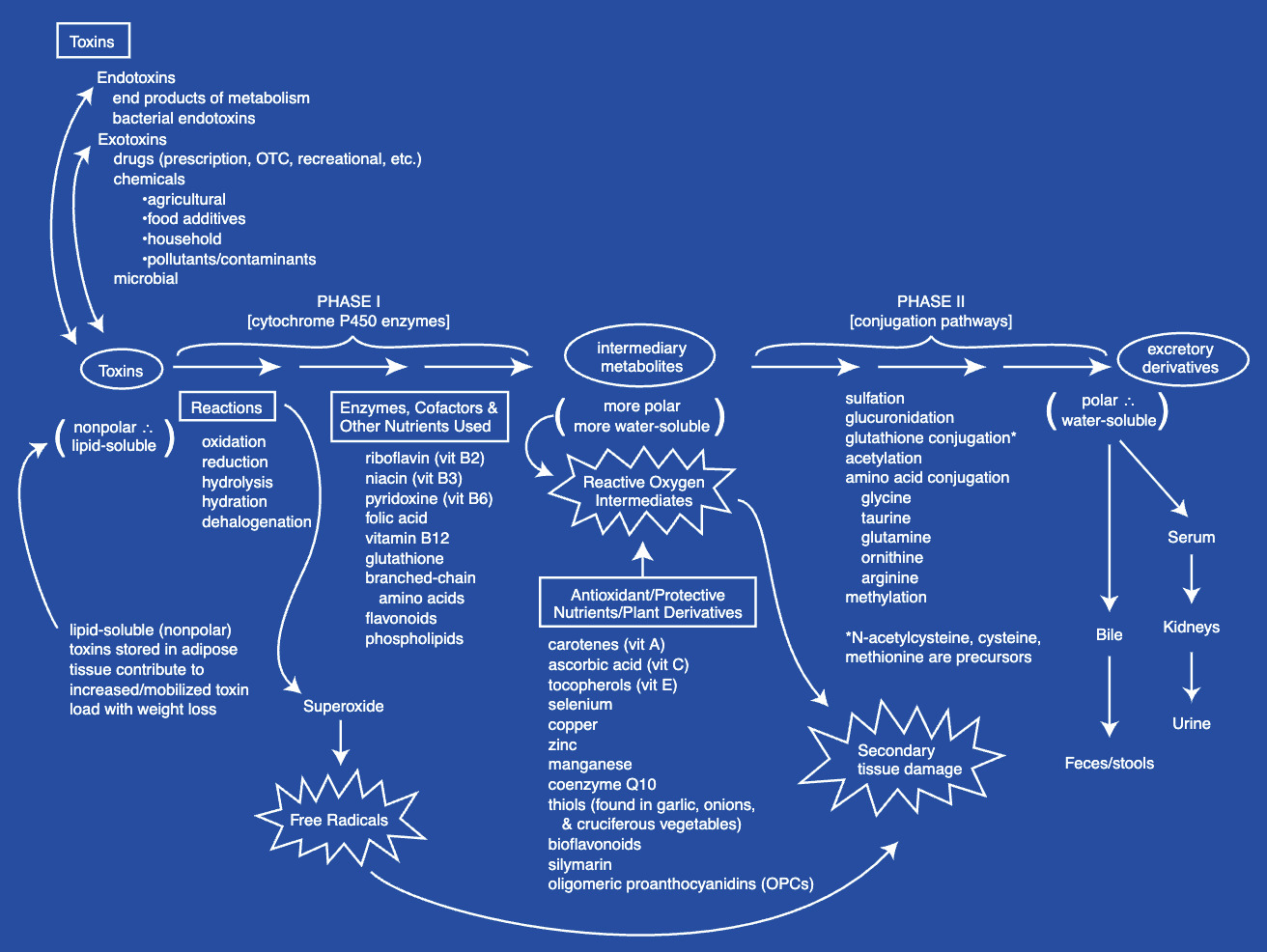
(Liska, 1998)
The liver is the primary organ responsible for detoxification of both endogenous (produced within the body) and exogenous (environmental) compounds. Detoxification occurs in two main phases.
Phase I (Cytochrome P450 enzyme system)
Function: Converts lipophilic (fat-soluble) toxins into more polar intermediates.
Location: Endoplasmic reticulum of hepatocytes.
Reactions:
Oxidation, reduction, hydrolysis, hydration, dehalogenation
Catalysed primarily by cytochrome P450 (CYP450) enzymes
Requirements:
Cofactors such as riboflavin (B2), niacin (B3), pyridoxine (B6), folic acid, vitamin B12
Glutathione, branched-chain amino acids, flavonoids, phospholipids
Byproducts:
Phase I reactions often create reactive oxygen species (ROS) and free radicals, which are highly reactive and may cause oxidative stress and tissue damage if not neutralised.
Phase II (Conjugation pathways)
Function: Conjugates the reactive metabolites from Phase I with hydrophilic molecules, making them water-soluble and ready for excretion.
Major pathways:
Sulphation – using sulphur donors like cysteine, methionine, NAC
Glucuronidation – using glucuronic acid, requires magnesium and B vitamins
Glutathione conjugation – using glutathione, NAC, vitamin C, selenium
Acetylation – requires acetyl-CoA, B5, B6
Amino acid conjugation – glycine, taurine, glutamine, ornithine, arginine
Methylation – requires folate, B12, betaine, SAMe, choline
Goal: Neutralise intermediates, reduce reactivity, and increase solubility.
Excretion
Once conjugated, compounds become polar and water-soluble.
Excretory routes include:
Bile → faeces (fat-soluble waste products)
Urine → via kidneys (water-soluble metabolites)
Minor pathways: sweat, breath
Genetics & When Detoxification Goes Wrong
The efficiency of liver detoxification varies greatly between individuals, and much of this variation is genetic. Many enzymes in both Phase I and Phase II have common polymorphisms (genetic variants) that can either speed up or slow down detoxification pathways.
Phase I (Cytochrome P450 enzymes):
Variants in genes such as CYP1A2, CYP1B1, CYP2D6, and CYP3A4 influence how quickly toxins, drugs, and hormones are activated. A fast Phase I combined with a sluggish Phase II may cause build-up of highly reactive intermediates, leading to oxidative stress, tissue irritation, or DNA damage.
Phase II (Conjugation enzymes):
Variants in enzymes such as GST (glutathione S-transferases), UGT (UDP-glucuronosyltransferases), SULT (sulfotransferases), NAT (N-acetyltransferases), and COMT (catechol-O-methyltransferase) can reduce conjugation efficiency. This means toxins and hormone metabolites (e.g. oestrogens) are not neutralised properly, contributing to hormone imbalances, carcinogen accumulation, and chronic inflammation.
Consequences of Imbalance
Oxidative Stress: Excess ROS from Phase I overwhelm antioxidant defences, damaging lipids, proteins, and DNA.
Hormonal Disturbance: Poor methylation or glucuronidation may impair oestrogen clearance, increasing risk of oestrogen dominance and hormone-related cancers.
Drug Sensitivity or Toxicity: Genetic “slow acetylators” (NAT variants) may experience stronger side effects from medications; “fast metabolisers” (CYP variants) may process drugs too quickly, reducing efficacy.
Carcinogenesis Risk: Impaired GST or UGT activity reduces clearance of environmental toxins and carcinogens.
Inflammation & Fatty Liver: Inefficient detoxification can worsen systemic inflammation and contribute to non-alcoholic fatty liver disease (NAFLD).
Practical Implications
Genetic testing (e.g. CYP450, GST, UGT polymorphisms) can reveal detox capacity and guide personalised nutrition and lifestyle choices.
Supporting weak pathways nutritionally (e.g. boosting glutathione for GST deficiency, methyl donors for impaired methylation, cruciferous vegetables for Phase II induction) may help restore balance.
Lifestyle factors such as alcohol, smoking, medications, and environmental toxins further interact with genetics, amplifying or mitigating risk.

How Nutrition Can Help
Both Phase I and Phase II generate free radicals. To protect against oxidative stress, antioxidant and supportive nutrients are critical:
Key antioxidants: vitamin C, vitamin E, selenium, zinc
Glutathione support: sulphur-rich foods (garlic, onions, cruciferous vegetables)
Protective phytonutrients: flavonoids, colourful plant foods, milk thistle (silymarin)
Simple Daily Strategies
Increase dietary fibre – supports bowel clearance and toxin elimination
Stay hydrated – optimises bile and kidney clearance
Limit alcohol and ultra-processed foods – lowers toxic burden
Support gut health – diverse microbiome reduces endotoxin load
Exercise & sleep – circulation and night-time liver regeneration are essential
Measuring Liver Detoxification Capacity
Liver function can be assessed through routine blood tests (e.g., ALT, AST, ALP, bilirubin), while detoxification efficiency and individual variations can be further explored using functional tests such as the DUTCH test (hormone and metabolite profiling) or genetic testing for detox enzyme polymorphisms.
For more precise, personalised advice Choose a Consultation.
Together we can create a tailored nutrition and lifestyle plan to optimise your detox pathways and improve overall wellbeing.
Find out more about testing options.
References:
Hodges, R.E. and Minich, D.M. (2015) ‘Modulation of Metabolic Detoxification Pathways Using Foods and Food-Derived Components: A Scientific Review with Clinical Application’, Journal of Nutrition and Metabolism, 2015, p. 760689. Available at: https://doi.org/10.1155/2015/760689.
Iyanagi, T. (2007) ‘Molecular mechanism of phase I and phase II drug-metabolizing enzymes: implications for detoxification’, International Review of Cytology, 260, pp. 35–112. Available at: https://doi.org/10.1016/S0074-7696(06)60002-8.
Liska, D.J. (1998) ‘The detoxification enzyme systems’, Alternative Medicine Review: A Journal of Clinical Therapeutic, 3(3), pp. 187–198. Available at: https://altmedrev.com/wp-content/uploads/2019/02/v3-3-187.pdf.
McDonnell, A.M. and Dang, C.H. (2013) ‘Basic Review of the Cytochrome P450 System’, Journal of the Advanced Practitioner in Oncology, 4(4), pp. 263–268. Available at: https://doi.org/10.6004/jadpro.2013.4.4.7.
Blogs and Insights