🥦 Nutrition & Nutrients
minerals
supplements
October 1, 2025
Share
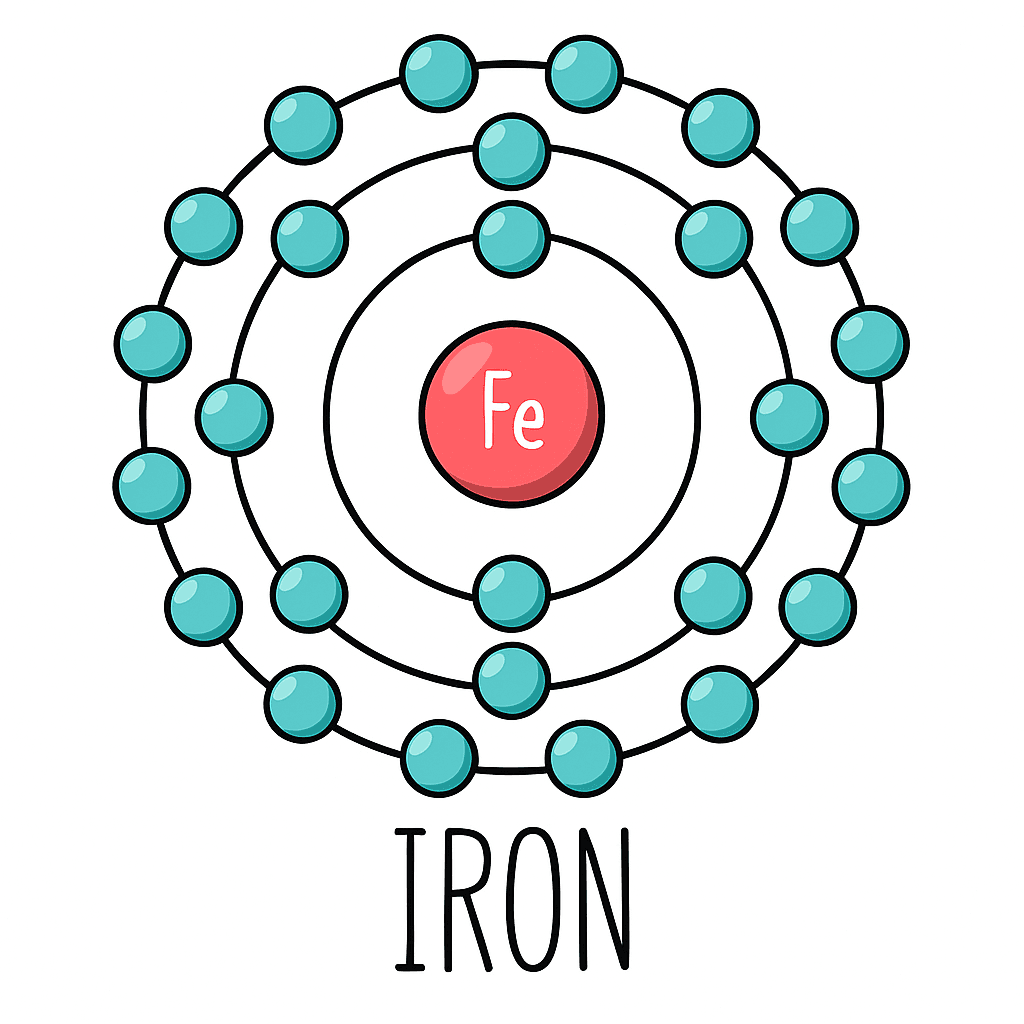
Iron is a mineral your body cannot function without. It is essential for oxygen transport (haemoglobin in red blood cells, myoglobin in muscles), energy metabolism, immune defence, and brain performance. Adults carry about 3–4 g of iron, mostly bound in haemoglobin and myoglobin. Deficiency can lead to fatigue, impaired cognition, and reduced work capacity.
Unlike many minerals, iron has no regulated excretion pathway — balance is maintained by adjusting intestinal absorption.
Where and How Iron is Absorbed
Site of absorption – Mainly in the duodenum and upper jejunum.
Transport -
Non-heme iron (plants, fortified foods) must be reduced to ferrous (Fe²⁺) form to enter intestinal cells via divalent metal transporter 1 (DMT1).
Heme iron (animal foods) uses a separate carrier and is broken down by heme oxygenase-1.
Export – Inside enterocytes, iron leaves via ferroportin, is oxidised by hephaestin, and binds to transferrin in the blood.
Regulation – The liver hormone hepcidin controls ferroportin activity; high hepcidin levels block export, reducing absorption.
Bioavailability: Why Form Matters
Type | Sources | Absorption rate |
|---|---|---|
Heme iron | Meat, poultry, fish | 15–35 % |
Non-heme iron | Plants, fortified foods | 2–20 % |
Enhancers of Non-Heme Iron Absorption
Vitamin C – Reduces Fe³⁺ to Fe²⁺ and keeps it soluble, even in alkaline conditions.
Meat factor peptides – Meat, poultry, or fish eaten with plant meals can double or triple non-heme absorption.
Inhibitors of Iron Absorption
Phytates – Whole grains, legumes; mitigated by soaking, sprouting, fermenting.
Polyphenols – Tea, coffee, cocoa; consume between meals.
Calcium – Large doses with meals reduce both heme and non-heme uptake.
Certain proteins – Casein, whey, egg white, soy protein.
Oxalates – Spinach, chard, beans, nuts.
Other metals – High zinc, manganese, cobalt, lead compete for transporters.
How Much Iron Do You Need?
(UK Dietary Reference Values, SACN 2023)
Group | Reference Nutrient Intake (RNI) |
|---|---|
Men ≥19 y | 8.7 mg/day |
Women 19–49 y | 14.8 mg/day |
Women ≥50 y | 8.7 mg/day |
Pregnancy | No increase specified in UK RNI (advised from diet), but WHO suggests 27 mg/day from all sources |
High-Iron Foods (per serving)
Beef, lamb – 2–3 mg (heme)
Chicken/turkey – 1–2 mg (heme)
Sardines, oysters, clams – up to 6 mg (heme)
Lentils (1 cup cooked) – 6.6 mg (non-heme)
White beans (1 cup cooked) – 8 mg (non-heme)
Tofu (½ block) – 3 mg (non-heme)
Pumpkin seeds (¼ cup) – 4.2 mg (non-heme)
Fortified cereals – 4–18 mg (non-heme, fortified)
Supplemental Forms of Iron
When diet alone is insufficient (confirmed by blood tests), oral iron supplements remain first-line therapy.
Traditional ferrous salts are still considered the standard reference due to high elemental iron content and proven efficacy, but they are often limited by gastrointestinal (GI) intolerance.
Form | Pros | Cons |
|---|---|---|
Ferrous sulfate | Well-studied, inexpensive, high absorption | High GI side-effects in up to 40% |
Ferrous fumarate / gluconate | Similar efficacy, different Fe content | Similar GI risk |
Ferrous bisglycinate | Fewer GI issues, good absorption | Higher cost, variable evidence in children |
Sucrosomial / liposomal iron | High tolerability, absorption less affected by inhibitors | Fewer long-term comparative trials |
Ferric maltol | Stable ferric complex, useful in IBD | Prescription-only, cost |
Carbonyl iron | Slow release, low toxicity risk | May be less effective in severe deficiency |
Heme iron polypeptide | Possibly better tolerance | Not vegetarian, limited availability |
Reference List
Abbaspour, N., Hurrell, R., & Kelishadi, R. (2014). Review on iron and its importance for human health. Journal of Research in Medical Sciences, 19(2), 164–174. Available at: https://www.ncbi.nlm.nih.gov/pmc/articles/PMC3999603/.
Fischer, J.A.J., Cherian, A.M., Bone, J.N., & Karakochuk, C.D. (2023). The effects of oral ferrous bisglycinate supplementation on hemoglobin and ferritin concentrations in adults and children: a systematic review and meta-analysis of randomized controlled trials. Nutrition Reviews, 81(8), 904–920. Available at: https://www.ncbi.nlm.nih.gov/pmc/articles/PMC10331582/.
Ganz, T. (2013). Systemic iron homeostasis. Physiological Reviews, 93(4), 1721–1741. Available at: https://journals.physiology.org/doi/full/10.1152/physrev.00008.2013.
Hallberg, L., Brune, M., & Rossander, L. (1989). The role of vitamin C in iron absorption. International Journal for Vitamin and Nutrition Research, 30, 103–108.
Hurrell, R.F., Reddy, M.B., Juillerat, M., & Cook, J.D. (2006). Meat protein fractions enhance nonheme iron absorption in humans. The Journal of Nutrition, 136(11), 2808–2812. Available at: https://www.sciencedirect.com/science/article/pii/S0022316622085297.
Kalman, D., Hewlings, S., & Madelyn-Adjei, A. (2024). Dietary heme iron: A review of efficacy, safety and tolerability. Nutrients, 17(13), 2132. Available at: https://www.mdpi.com/2072-6643/17/13/2132.
Nemeth, E., & Ganz, T. (2006). Regulation of iron metabolism by hepcidin. Annual Review of Nutrition, 26, 323–342. https://doi.org/10.1146/annurev.nutr.26.061505.111303.
Pantopoulos, K. (2024). Oral iron supplementation: new formulations, old questions. Haematologica, 109(9), 2790–2801. doi: 10.3324/haematol.2024.284967. Available at: https://www.ncbi.nlm.nih.gov/pmc/articles/PMC11367235/.
Rouault, T.A. (2022). Molecular mechanisms of iron and heme metabolism. Annual Review of Nutrition, 42, 311–335. https://doi.org/10.1146/annurev-nutr-062320-112625.
Scientific Advisory Committee on Nutrition (SACN). (2010). Iron and Health. Available at: https://www.gov.uk/government/publications/sacn-iron-and-health-report.
Further Resources
For more advice on how vegans and vegetarians can get enough iron, including food combinations, meal ideas, and supplement tips download my free PDF guide: 📄 The Complete Vegan Nutrition Guide: Avoiding Deficiencies
Blogs and Insights