🌸 Hormones & Women’s Health
sleep
root cause
October 1, 2025
Share
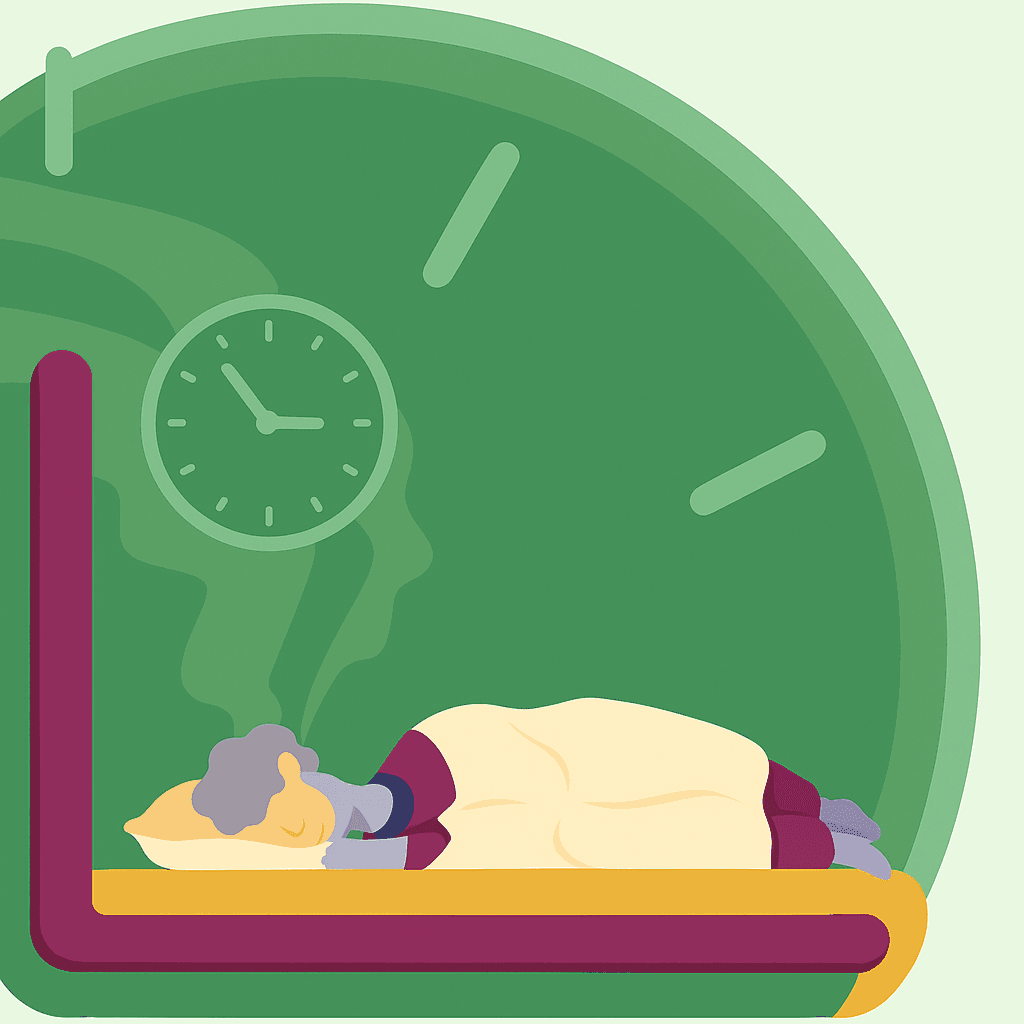
Why Sleep Is Essential for Health
Sleep is a vital biological process. During deep sleep, the brain’s glymphatic system flushes out metabolic waste and toxins, supports memory consolidation and learning, and regulates inflammation . Lack of restorative sleep can impair metabolism, mood and immune function, and contributes to chronic disease risk .
How Sleep Works: Two Key Processes
Process S (Sleep Pressure): Adenosine, a by-product of ATP breakdown, accumulates in the brain during wakefulness and promotes sleep drive; it is metabolised during sleep .
Process C (Circadian Rhythm): The body’s master clock in the suprachiasmatic nucleus (in the brain) regulates the 24‑hour cycle of wakefulness and sleep.
When these processes are out of sync, sleep disorders such as insomnia, delayed sleep phase syndrome, or fatigue may occur.
The Hormonal Connection: Three Key Players
Melatonin – The Sleep Hormone
Signals the body to sleep and acts as a potent antioxidant and immune regulator. Exposure to artificial light (<200 lux) before bedtime suppresses melatonin onset and shortens its duration. Caffeine taken ~3 hours before habitual bedtime delays melatonin onset and shifts the circadian clock .
Cortisol – The Stress Hormone
Normally peaks in the morning and declines through the day. Chronic stress flattens this curve or raises evening cortisol, contributing to fatigue, anxiety and insomnia and even weight gain. Flattened diurnal cortisol slopes are linked to depression and cardiovascular disease
Progesterone – The Calming Hormone
Progesterone and its metabolites have sleep‑promoting effects; women sleep worse when progesterone declines (late luteal phase). Its hypnotic properties resemble those of GABA_A receptor modulators. Stress is associated with lower, not higher, progesterone levels . Progesterone therapy can improve sleep during menopause.
Possible Causes of Sleep Problems
Hormonal Dysregulation: Menopause and other reproductive transitions can disrupt sleep via declining progesterone and oestrogen.
HPA Axis Dysfunction: Chronic stress alters cortisol rhythms and increases glucocorticoids, which may induce sleep disorders.
Nutritional Deficiencies: A diet rich in tryptophan helps the body produce serotonin and melatonin; older adults who ate high‑tryptophan diets reported better sleep . Adequate B‑vitamins are needed to synthesise melatonin, and magnesium supplementation improved insomnia symptoms in an elderly cohort.
Methylation Issues: Melatonin synthesis requires methylation of serotonin. A case study of a patient with an MTHFR polymorphism (which reduces methylation capacity) found that supplementing with methyl donors and B‑vitamins restored melatonin production and resolved chronic insomnia.
Natural Solutions for Better Sleep
Sleep Hygiene
Avoid screens 30–60 minutes before bed;
Keep your bedroom dark, cool, and quiet;
Create a calming routine (reading, meditation, warm bath).
Melatonin Support
Expose yourself to natural daylight in the morning;
Avoid LED light at night;
Eat melatonin-supportive foods (cherries, nuts, tryptophan-rich proteins).
Stress & Cortisol Balance
Practice mindfulness, yoga, or breathwork;
Consider supplements like magnesium, L-theanine, or phosphatidylserine;
Reduce stimulants (caffeine, nicotine).
Progesterone Support
Herbal support such as Wild Yam cream and Agnus Castus tea;
Bioidentical progesterone if clinically indicated.

Final Thoughts
Scientific evidence confirms that sleep quality is deeply intertwined with hormones and stress. Adenosine build‑up (Process S), circadian rhythms (Process C), and hormones like melatonin, cortisol, and progesterone collectively determine how well we sleep. Chronic stress disrupts cortisol rhythms and lowers progesterone, while poor nutrition or methylation issues compromise melatonin synthesis. Addressing these root causes through good sleep hygiene, stress management (mindfulness, yoga nidra), dietary support (tryptophan, B‑vitamins, magnesium), and hormone therapy when indicated can help restore deep, restorative sleep.
References:
Abbasi, B. et al. (2012) ‘The effect of magnesium supplementation on primary insomnia in elderly: A double-blind placebo-controlled clinical trial’, Journal of Research in Medical Sciences : The Official Journal of Isfahan University of Medical Sciences, 17(12), pp. 1161–1169. Available at: https://pubmed.ncbi.nlm.nih.gov/23853635/
Adam, E.K. et al. (2017) ‘Diurnal Cortisol Slopes and Mental and Physical Health Outcomes: A Systematic Review and Meta-analysis’, Psychoneuroendocrinology, 83, pp. 25–41. Available at: https://doi.org/10.1016/j.psyneuen.2017.05.018.
Ahmad, S.B. et al. (2023) ‘Melatonin and Health: Insights of Melatonin Action, Biological Functions, and Associated Disorders’, Cellular and Molecular Neurobiology, 43(6), pp. 2437–2458. Available at: https://doi.org/10.1007/s10571-023-01324-w.
Beroukhim, G., Esencan, E. and Seifer, D.B. (2022) ‘Impact of sleep patterns upon female neuroendocrinology and reproductive outcomes: a comprehensive review’, Reproductive Biology and Endocrinology : RB&E, 20, p. 16. Available at: https://doi.org/10.1186/s12958-022-00889-3.
Black, D.S. et al. (2015) ‘Mindfulness Meditation and Improvement in Sleep Quality and Daytime Impairment Among Older Adults With Sleep Disturbances: A Randomized Clinical Trial’, JAMA Internal Medicine, 175(4), pp. 494–501. Available at: https://doi.org/10.1001/jamainternmed.2014.8081.
Blume, C. and Münch, M. (2025) ‘Chapter 1 - Effects of light on biological functions and human sleep’, in L. Ferini-Strambi and C. Cajochen (eds) Handbook of Clinical Neurology. Elsevier (Circadian Rhythms, Sleep, and Sleep Disorders), pp. 3–16. Available at: https://doi.org/10.1016/B978-0-323-90918-1.00008-3.
Burke, T.M. et al. (2015) ‘Effects of caffeine on the human circadian clock in vivo and in vitro’, Science Translational Medicine, 7(305), p. 305ra146. Available at: https://doi.org/10.1126/scitranslmed.aac5125.
Czeisler, C.A. and Gooley, J.J. (2007) ‘Sleep and Circadian Rhythms in Humans’, Cold Spring Harbor Symposia on Quantitative Biology, 72, pp. 579–597. Available at: https://doi.org/10.1101/sqb.2007.72.064.
Deboer, T. (2018) ‘Sleep homeostasis and the circadian clock: Do the circadian pacemaker and the sleep homeostat influence each other’s functioning?’, Neurobiology of Sleep and Circadian Rhythms, 5, pp. 68–77. Available at: https://doi.org/10.1016/j.nbscr.2018.02.003.
España, R.A. and Scammell, T.E. (2011) ‘Sleep Neurobiology from a Clinical Perspective’, Sleep, 34(7), pp. 845–858. Available at: https://doi.org/10.5665/SLEEP.1112.
Eugene, A.R. and Masiak, J. (2015) ‘The Neuroprotective Aspects of Sleep’, MEDtube Science, 3(1), pp. 35–40. Available at: https://pmc.ncbi.nlm.nih.gov/articles/PMC4651462/
Goel, N. et al. (2013) ‘Chapter Seven - Circadian Rhythms, Sleep Deprivation, and Human Performance’, in M.U. Gillette (ed.) Progress in Molecular Biology and Translational Science. Academic Press (Chronobiology: Biological Timing in Health and Disease), pp. 155–190. Available at: https://doi.org/10.1016/B978-0-12-396971-2.00007-5.
Gooley, J.J. et al. (2011) ‘Exposure to Room Light before Bedtime Suppresses Melatonin Onset and Shortens Melatonin Duration in Humans’, The Journal of Clinical Endocrinology and Metabolism, 96(3), pp. E463–E472. Available at: https://doi.org/10.1210/jc.2010-2098.
Leproult, R. and Van Cauter, E. (2010) ‘Role of Sleep and Sleep Loss in Hormonal Release and Metabolism’, Endocrine Development, 17, pp. 11–21. Available at: https://doi.org/10.1159/000262524.
Patel, A.K. et al. (2025) ‘Physiology, Sleep Stages’, in StatPearls. Treasure Island (FL): StatPearls Publishing. Available at: http://www.ncbi.nlm.nih.gov/books/NBK526132/ (Accessed: 16 August 2025).
Porkka-Heiskanen, T. and Kalinchuk, A.V. (2011) ‘Adenosine, energy metabolism and sleep homeostasis’, Sleep Medicine Reviews, 15(2), pp. 123–135. Available at: https://doi.org/10.1016/j.smrv.2010.06.005.
Reddy, O.C. and van der Werf, Y.D. (2020) ‘The Sleeping Brain: Harnessing the Power of the Glymphatic System through Lifestyle Choices’, Brain Sciences, 10(11), p. 868. Available at: https://doi.org/10.3390/brainsci10110868.
Reppert, S.M. and Weaver, D.R. (2002) ‘Coordination of circadian timing in mammals’, Nature, 418(6901), pp. 935–941. Available at: https://doi.org/10.1038/nature00965.
Xie, L. et al. (2013) ‘Sleep Drives Metabolite Clearance from the Adult Brain’, Science, 342(6156), pp. 373–377. Available at: https://doi.org/10.1126/science.1241224.
Yoto, A. et al. (2012) ‘Effects of L-theanine or caffeine intake on changes in blood pressure under physical and psychological stresses’, Journal of Physiological Anthropology, 31(1), p. 28. Available at: https://doi.org/10.1186/1880-6805-31-28.
Blogs and Insights