❤️🩹 Cardiovascular Health
Cholesterol
Nutrition
May 19, 2026
Share
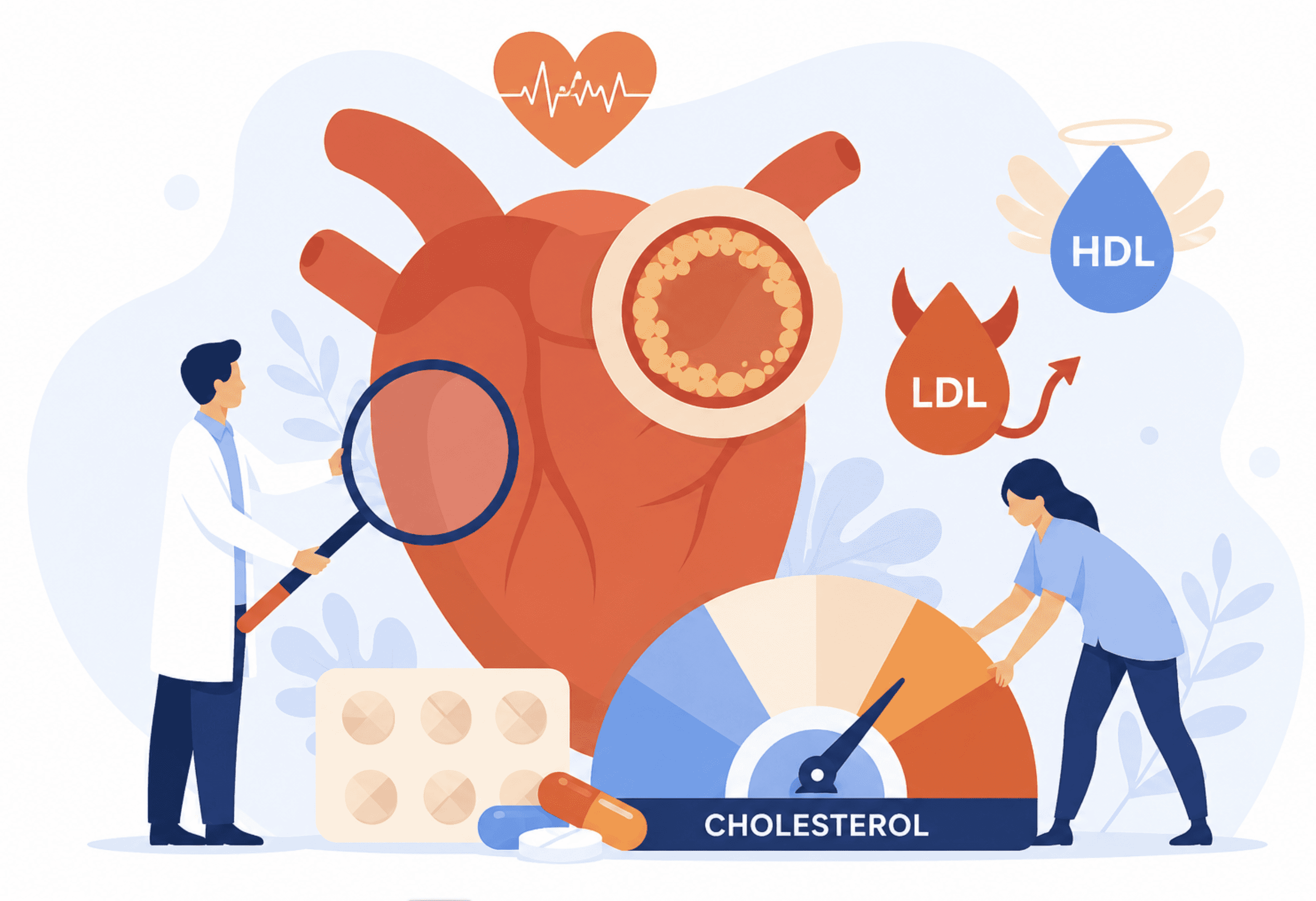
LDL cholesterol is often described as “bad cholesterol”, but this is an oversimplification. LDL is not inherently bad: it is a transport particle that carries cholesterol, triglyceride residues, fat-soluble compounds and signalling molecules through the bloodstream. The problem arises when there are too many LDL particles, when they remain in circulation for too long, or when they become more likely to enter and remain within the artery wall.
LDL-C ranges
These ranges are general interpretive brackets. Optimal LDL-C depends on the person’s total cardiovascular risk, family history, ApoB, Lp(a), blood pressure, smoking status, diabetes status and previous cardiovascular disease.
LDL-C category | mmol/L | mg/dL |
|---|---|---|
Optimal / desirable for many healthy adults | <3.0 mmol/L | <116 mg/dL |
Borderline raised | 3.0–3.9 mmol/L | 116–150 mg/dL |
Raised | 4.0–4.9 mmol/L | 155–190 mg/dL |
Very raised / possible familial pattern | ≥4.9 mmol/L | ≥190 mg/dL |
Severe elevation, strongly consider familial hypercholesterolaemia or secondary causes | ≥6.5 mmol/L | ≥251 mg/dL |
Very severe elevation | ≥8.5 mmol/L | ≥325 mg/dL |
The four main biochemical reasons LDL rises
Almost every cause of raised LDL fits into one or more of these mechanisms:
1. Reduced LDL receptor activity
The liver clears LDL from the blood mainly using LDL receptors. When receptor number or function falls, LDL particles remain in circulation longer. LDL receptors are like “catching hooks” on liver cells. Their job is to pull LDL particles out of the blood.
This can happen because of:
high saturated fat intake;
high dietary cholesterol in responsive individuals;
hypothyroidism;
familial hypercholesterolaemia;
PCSK9 overactivity (which breaks down too many LDL receptors);
some medications;
menopause or low oestrogen states.
2. Increased liver cholesterol pool
The liver constantly senses how much cholesterol it contains. When hepatic cholesterol rises, the liver often reduces LDL receptor expression because it “feels” cholesterol-replete. The result is reduced LDL clearance.
This can be driven by:
dietary cholesterol;
saturated fat;
increased intestinal cholesterol absorption;
cholestasis;
certain genetic variants;
reduced bile acid excretion.
3. Increased ApoB particle production
ApoB is the structural protein found on VLDL, IDL, LDL and Lp(a). Each LDL particle contains one ApoB molecule, so ApoB is a useful marker of the number of atherogenic particles.
LDL-C measures cholesterol mass inside LDL particles. ApoB measures particle number. A person can have “normal” LDL-C but high ApoB if they have many small cholesterol-poor LDL particles.
ApoB particle production rises with:
insulin resistance;
fatty liver;
high refined carbohydrate intake;
excess alcohol;
high fructose intake;
visceral adiposity;
familial combined hyperlipidaemia.
4. Inherited differences in lipid transport
Genes can influence LDL receptor function, ApoB binding, cholesterol absorption, bile acid metabolism, PCSK9 activity and Lp(a). This explains why two people can eat similar diets but have very different LDL responses.
Dietary mechanisms of LDL elevation
1. Saturated fat
Saturated fat is one of the most established dietary drivers of LDL-C elevation. The key mechanism is reduced hepatic LDL receptor activity, meaning the liver removes less LDL from the bloodstream.
Chemically, saturated fatty acids contain no double bonds. This makes them straight, stable molecules that pack tightly in cell membranes. High intakes can influence hepatic membrane composition, cholesterol sensing and LDL receptor regulation.
Not all saturated fatty acids behave identically.
Saturated fatty acid | Common food sources | LDL effect |
|---|---|---|
Lauric acid, C12:0 | coconut oil, palm kernel oil | raises LDL-C, also raises HDL-C |
Myristic acid, C14:0 | butter, cream, cheese, coconut | strongly raises LDL-C |
Palmitic acid, C16:0 | palm oil, fatty meat, dairy fat | raises LDL-C |
Stearic acid, C18:0 | cocoa butter, beef fat | relatively neutral compared with other saturated fats |
Human feeding studies show that replacing saturated fats with unsaturated fats lowers LDL-C.
Food examples high in LDL-raising saturated fat
butter;
ghee;
cream;
cheese;
fatty cuts of meat;
processed meat;
coconut oil;
palm oil;
pastries, biscuits and cakes made with hard fats.
The goal is not necessarily “zero saturated fat”, but replacing excess saturated fat with extra virgin olive oil, nuts, seeds, avocado, oily fish and other unsaturated fat sources.
2. Trans fats
Trans fats are unsaturated fats with a trans double-bond configuration. This shape makes them behave more like saturated fats in membranes and lipoprotein metabolism. Trans fatty acids increase LDL-C and ApoB, probably by reducing LDL-ApoB catabolism, meaning LDL particles are broken down and cleared more slowly.
Industrial trans fats are particularly harmful because they:
increase LDL-C;
increase ApoB;
reduce HDL-C;
worsen inflammation and endothelial function;
impair LDL particle clearance.
Main sources include partially hydrogenated oils, some margarines, shortenings, commercial baked goods and deep-fried foods, depending on the country and food regulations.
3. Dietary cholesterol
Dietary cholesterol is found only in animal foods. It is present in:
egg yolks;
liver and organ meats;
shellfish;
meat;
poultry;
cheese;
butter.
Dietary cholesterol can increase the liver cholesterol pool. When the liver receives more cholesterol, it may reduce LDL receptor expression, which reduces LDL clearance.
However, the response varies significantly between individuals. Endotext reports that approximately 15–25% of people are hyper-responders, meaning their LDL-C rises more strongly in response to dietary cholesterol.
This is why eggs may have little effect in one person but noticeably raise LDL-C in another, especially if combined with high saturated fat intake or genetic susceptibility.
4. Low intake of unsaturated fats
Unsaturated fats generally support healthier LDL metabolism when they replace saturated fats.
Monounsaturated fats
Found in:
olive oil;
avocado;
almonds;
hazelnuts;
macadamia nuts.
Monounsaturated fats can lower LDL-C when they replace saturated fat, while often maintaining HDL-C.
Polyunsaturated fats
Found in:
walnuts;
sunflower seeds;
flaxseed;
chia;
oily fish;
soybean, sunflower and rapeseed oils.
Polyunsaturated fats, especially when replacing saturated fat, are particularly effective at lowering LDL-C. Mechanistically, unsaturated fats increase hepatic LDL receptor activity, improving LDL clearance from the blood.
5. Low soluble fibre intake
Soluble fibre lowers LDL-C through bile acid chemistry.
Bile acids are made from cholesterol in the liver. They are released into the intestine to digest fats, then mostly reabsorbed and recycled. Soluble fibre binds bile acids in the gut and increases their excretion in stool. The liver then has to use more cholesterol to make new bile acids. This can lower the liver cholesterol pool and increase LDL receptor expression.
In simple terms:
more soluble fibre → more bile acid loss → more hepatic cholesterol used → more LDL receptors → lower LDL-C
Useful sources include:
oats;
barley;
psyllium husk;
beans;
lentils;
chickpeas;
apples;
citrus fruits;
ground flaxseed;
chia seeds.
A meta-analysis of controlled trials found that soluble fibre reduces total and LDL cholesterol, although the effect is usually modest and depends on dose and consistency.
6. Low plant sterol and stanol intake
Plant sterols and stanols are structurally similar to cholesterol. Because of this similar structure, they compete with cholesterol for absorption in the intestine.
They reduce LDL-C by:
reducing intestinal cholesterol absorption;
increasing cholesterol excretion;
reducing cholesterol delivery to the liver;
encouraging LDL receptor activity.
Meta-analyses show that plant sterols and stanols can reduce LDL-C by approximately 5–15%, with effects increasing up to around 3 g/day in trials. The British Dietetic Association states that 1.5–3 g/day can lower LDL-C by around 7.5–12% when eaten regularly as part of a healthy diet.
Important caveat: plant sterol supplements are not suitable for everyone, especially people with sitosterolaemia, a rare genetic sterol-storage condition.
7. Refined carbohydrates and sugar
Refined carbohydrates do not usually raise LDL-C in the same direct way as saturated fat. Their main effect is through insulin resistance and VLDL production.
When the liver receives excess glucose or fructose, especially in the context of insulin resistance, it can convert carbohydrate into fatty acids through de novo lipogenesis. These fats are packaged into VLDL particles. VLDL can then be remodelled into IDL and LDL.
This pattern often shows as:
raised triglycerides;
low HDL-C;
small dense LDL;
raised ApoB;
fatty liver;
increased waist circumference.
So LDL-C may be only mildly raised, but the number of ApoB-containing particles can be high.
Common contributors include:
sugar-sweetened drinks;
sweets;
cakes;
biscuits;
white bread;
refined cereals;
frequent snacking;
high-fructose processed foods.
8. Fructose
Fructose is metabolised differently from glucose. Much of it is processed in the liver, where excess fructose can promote:
de novo lipogenesis;
hepatic triglyceride synthesis;
VLDL secretion;
fatty liver;
increased ApoB particle production.
Fructose from whole fruit is usually not the issue because fruit contains fibre, water, polyphenols and a lower energy density. The concern is mainly high intake from:
soft drinks;
fruit juice;
syrups;
sweetened yoghurts;
desserts;
ultra-processed foods.
9. Very-low-carbohydrate and ketogenic diets
Ketogenic diets can lower triglycerides and raise HDL-C, but in some people they markedly raise LDL-C.
Possible mechanisms include:
high saturated fat intake;
increased fatty acid trafficking to the liver;
increased VLDL turnover into LDL;
reduced insulin signalling;
increased reliance on fat transport;
genetic susceptibility.
A particular pattern has been described in lean, insulin-sensitive individuals who develop very high LDL-C on ketogenic diets, often with high HDL-C and low triglycerides. This is sometimes called a “lean mass hyper-responder” phenotype, although its long-term risk is still debated.
Clinical case series have reported dramatic LDL-C rises on ketogenic diets, with substantial LDL-C reductions after stopping the diet. One 2023 case series reported an average LDL-C fall of 174 mg/dL, approximately 4.5 mmol/L, after discontinuation.
This does not mean all low-carbohydrate diets are harmful. It means LDL-C, ApoB and Lp(a) should be monitored, especially when the diet is high in butter, cream, cheese, coconut oil or fatty meat.
10. Unfiltered coffee
Coffee contains diterpenes called cafestol and kahweol. These compounds are largely trapped by paper filters, which is why filtered coffee has less effect on LDL-C.
Unfiltered coffee methods include:
French press;
boiled coffee;
Turkish coffee;
Scandinavian boiled coffee;
some espresso-based preparations, depending on filtration.
Cafestol can alter hepatic cholesterol and bile acid metabolism, leading to higher LDL-C. Human studies and meta-analyses show stronger cholesterol-raising effects from unfiltered coffee than filtered coffee.
11. Alcohol
Alcohol does not have a simple LDL-C effect. Moderate intake may sometimes appear neutral or HDL-raising in observational data, but this should not be interpreted as a health recommendation.
From a lipid chemistry perspective, alcohol can:
increase hepatic triglyceride synthesis;
increase VLDL secretion;
worsen fatty liver;
worsen insulin resistance;
raise blood pressure;
increase inflammation and oxidative stress.
The most common lipid pattern with excess alcohol is high triglycerides, but over time, liver dysfunction and metabolic stress can also worsen LDL-related risk.
12. Excess energy intake and weight gain
When energy intake chronically exceeds energy expenditure, especially with visceral fat gain, adipose tissue releases more free fatty acids into the portal circulation. These fatty acids travel directly to the liver.
The liver then produces more triglyceride-rich VLDL particles. VLDL particles are gradually remodelled into IDL and LDL.
This pattern is common in:
insulin resistance;
metabolic syndrome;
fatty liver;
type 2 diabetes;
central obesity.
LDL-C may be normal, mildly raised or high, but ApoB is often more informative because it reflects particle number.
In the next posts, I will explore the hereditary and metabolic reasons why LDL cholesterol can become elevated, including genetic conditions such as familial hypercholesterolaemia, inherited differences in cholesterol transport, thyroid function, insulin resistance, liver health and other internal factors that influence LDL metabolism.
Reference list:
AbuMweis, S.S., Barake, R. and Jones, P.J.H. (2008) ‘Plant sterols/stanols as cholesterol lowering agents: A meta-analysis of randomized controlled trials’, Food & Nutrition Research, 52. Available at: https://pmc.ncbi.nlm.nih.gov/articles/PMC2596710/.
Brown, L., Rosner, B., Willett, W.W. and Sacks, F.M. (1999) ‘Cholesterol-lowering effects of dietary fiber: A meta-analysis’, The American Journal of Clinical Nutrition, 69(1), pp. 30–42.
Clifton, P.M. and Keogh, J.B. (2017) ‘A systematic review of the effect of dietary saturated and polyunsaturated fat on heart disease’, Nutrition, Metabolism and Cardiovascular Diseases, 27(12), pp. 1060–1080.
Feingold, K.R. (2025) The effect of diet on cardiovascular disease and lipid and lipoprotein levels. Endotext. South Dartmouth, MA: MDText.com. Available at: https://www.endotext.org/wp-content/uploads/pdfs/the-effect-of-diet-on-cardiovascular-disease-and-lipid-and-lipoprotein-levels.pdf.
Mensink, R.P., Zock, P.L., Kester, A.D.M. and Katan, M.B. (2003) ‘Effects of dietary fatty acids and carbohydrates on the ratio of serum total to HDL cholesterol and on serum lipids and apolipoproteins: A meta-analysis of 60 controlled trials’, The American Journal of Clinical Nutrition, 77(5), pp. 1146–1155.
Ras, R.T., Geleijnse, J.M. and Trautwein, E.A. (2014) ‘LDL-cholesterol-lowering effect of plant sterols and stanols across different dose ranges: A meta-analysis of randomised controlled studies’, British Journal of Nutrition, 112(2), pp. 214–219.
Schmidt, T., et al. (2023) ‘Dramatic elevation of LDL cholesterol from ketogenic dieting: A case series’, American Journal of Preventive Cardiology, 14, 100495. Available at: https://pmc.ncbi.nlm.nih.gov/articles/PMC10121782/.
Urgert, R. and Katan, M.B. (1997) ‘The cholesterol-raising factor from coffee beans’, Annual Review of Nutrition, 17, pp. 305–324.
Blogs and Insights